
The Katyn Massacre: Stalin’s most carefully hidden crime
In 1940, Stalin ordered the execution of 22,000 Polish prisoners. The Soviet Union hid the truth for 50 years. Here's the story of the Katyn Massacre.
Image: Graves at the Katyn Polish War Cemetary | stock.adobe.com
We all know that World War II began when Nazi Germany invaded Poland in September 1939. However, it’s easy to forget now that the Soviet Union actually followed Germany’s lead just over two weeks later.
As viewers of Sky HISTORY’s World War II with Tom Hanks will know, the Germans and Soviets were initially on good terms during the war. It wasn’t until the Wehrmacht launched a shock attack on the Soviet Union in June 1941 that the relationship soured.
In the meantime, though, the Soviets had secretly carried out the Katyn Massacre, an atrocity they would diligently conceal for decades. This has left it one of the lesser-known events of the war. It's a gap in public knowledge that Sky HISTORY is determined to address, to learn exactly what happened and how the Soviets even tried to deflect blame for it.
A matter of life or death for Polish POWs
In August 1939, Germany and the Soviet Union signed the Molotov-Ribbentrop Pact, where the two powers secretly agreed to partition Poland between them. So, after Germany invaded Poland from the west on 1st September, the Soviets did likewise from the east on 17th September.
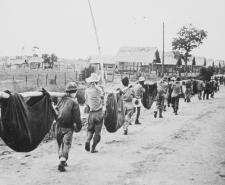
As the Soviets absorbed more and more Polish territory, thousands of Polish citizens were captured. Though many were later released, others were sent to camps run by the Soviet secret police, the People’s Commissariat for Internal Affairs (NKVD).
Approximately 20,000 Poles were left split between a number of Soviet imprisonment sites, including the major camps at Kozelsk, Ostashkov and Starobilsk. The prisoners of war (POWs) kept at these camps were heavily interrogated about their political leanings.
The Soviet top brass wanted to know whether these captives were sympathetic to the communist cause – and whether they could be converted if not. Unbeknownst to the prisoners themselves, however, their answers to these questions were ultimately going to determine if they were to live or die.
How the Katyn Massacre unfolded
Of the hundreds of thousands of Poles captured by Soviet forces early in the war, about 22,000 were deemed too risky to release. In fact, they were deemed too risky even to be kept alive. NKVD chief Lavrentiy Beria believed that these Poles, including not only soldiers but also intellectuals, landowners and lawyers, could seriously undermine Soviet hegemony over Poland.
On Beria’s encouragement, Soviet premier Josef Stalin and five other Politburo members authorised the execution of these Polish ‘nationalists and counterrevolutionaries’
. The unwitting victims, under the impression that they were being sent home, were transported to their intended execution sites in western Russia and Ukraine.
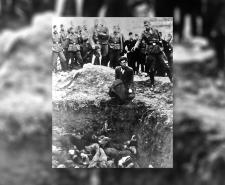
Many of the Poles were shot dead one by one in the spring of 1940, with the resulting corpses hurriedly thrown into makeshift graves. One of the burial sites was in Katyn Forest, where Germans would discover it years later. Hence, the killings came to be known as the ‘Katyn Massacre’, despite many of the bodies actually being left elsewhere.
Early reactions to the Katyn Massacre
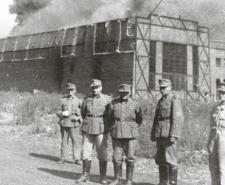
The Germans had every reason to break news of the Katyn Massacre to the world, as indeed they did. Nazi propaganda chief Joseph Goebbels saw it as a great opportunity to sow division within the enemy Allied powers’ ranks. However, the Soviets insisted that the rediscovered Poles had actually been killed by German forces during Operation Barbarossa in August 1941.
Both UK prime minister Winston Churchill and US president Franklin Delano Roosevelt chose not to publicly challenge the Soviet account. At the time, neither man wanted to openly antagonise Stalin, a fellow Allied leader. Though the Germans and the exiled Polish government called on the International Red Cross to examine the Katyn site, the Soviets would not allow this. So, the British and the Americans also chose not to pursue the matter publicly.
The Katyn myth finally starts to crumble
In the 1980s, Mikhail Gorbachev became the new Soviet Union leader and soon ushered in a new era of ‘glasnost’ (openness). In this spirit, Gorbachev eventually conceded in 1990 that the NKVD had indeed been culpable for the Katyn Massacre.
The following year, the Soviet Union itself was wound up, leaving the Russian Federation as its successor state. In 2010, the Russian State Duma, the Russian Federal Assembly’s lower house, officially blamed Stalin and other Soviet officials for authorising the Katyn Massacre.
History added a cruel final note. In April 2010, Polish President Lech Kaczyński and 95 others died when their plane crashed near Smolensk. They had been on their way to attend a ceremony commemorating the 70th anniversary of the Katyn Massacre – killed in the very region where the atrocity had taken place.
For more on the wartime atrocities and cover-ups that history has only slowly brought to light, sign up to the Sky HISTORY newsletter. Every week, you'll receive the latest articles, episodes and more delivered straight to your inbox.


