
How China helped overthrow fascism in WWII
How was China involved in WWII? To tie in with Sky HISTORY’s World War II with Tom Hanks, we look at how the Japanese army was defeated on Chinese turf.
Image: Public Domain
When did World War II start? The date often chosen is 1st September 1939, when Nazi Germany invaded Poland. It was the straw that broke the camel’s back for Britain and France – and both responded by declaring war on the increasingly aggressive, militaristic Germany.
But what if we told you that this is actually a very Westernised view of how the war began? There are good reasons why it is called a world war. Was China involved in WW2? The war’s ‘Pacific Theatre’ can be said to have begun in 1937, when the Empire of Japan launched a large-scale invasion of China.
China fought valiantly against Japan until the latter’s surrender in 1945. However, up until recently, China’s role as one of the war’s victorious Allied powers has been largely overlooked. Why? It’s a good time to ask, as we at Sky HISTORY prepare to air the revelatory new docuseries World War II with Tom Hanks, starting Tuesday, 26th May at 9pm.
How the Sino-Japanese War broke out
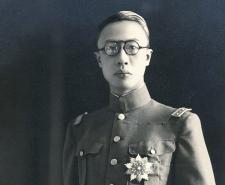
Germany certainly wasn’t the only country intent on expanding its geographical reach in the 1930s. Early in the decade, the Japanese invaded China’s Manchuria region and turned it into a puppet state headed by Puyi, a former emperor of China.
The Japanese attempted to nab even more Chinese territory over the next few years. The simmering tensions between China and Japan eventually bubbled over into what history now dubs the ‘Second Sino-Japanese War’. (This is to distinguish it from the First Sino-Japanese War of 1894-95).
In July 1937, Japan demanded the right to search the Chinese settlement of Wanping for a Japanese soldier who had supposedly gone missing there. When permission was not immediately granted, the Japanese responded with military action. This altercation is now known as the ‘Marco Polo Bridge incident’.
Shanghai and Nanjing fall to the Japanese
China’s Nationalist government had been waging a civil war against the Chinese Communist Party (CCP) since 1927. However, these long-opposing forces decided to temporarily set aside their differences to repel their common foe, the persistently encroaching Japanese.
Despite these combined forces, the Chinese initially struggled in the war. Militarily lacking the same advanced training and equipment as their adversaries, the Chinese lost large areas of land to the Japanese. These included Shanghai (albeit only after fierce Chinese resistance in the three-month-long Battle of Shanghai) in November 1937 and Nanjing the following month.
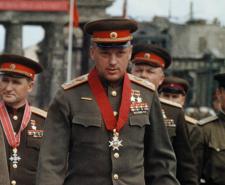
The Japanese campaign in the Battle of Nanjing is especially notorious for unleashing the Nanjing Massacre. This is where Japanese soldiers are thought to have killed tens of thousands of civilians. Mass rape and looting are also among the atrocities said to have been committed by the Imperial Japanese Army in Nanjing.
How was China involved in WW2?
The Soviet Union supported China in its struggle, due to fears that Japan would use a conquered China as a launchpad to invade Russia. Japan also made an enemy of the United States, especially after attacking Pearl Harbour in 1941. The US undermined Japan by imposing an oil embargo and sending troops to fight for China.
Even if the Second Sino-Japanese War might not have initially seemed to hold major implications for the wider world, that wasn’t the case for long. China’s determination to stay the course tied down Japanese troops, helping to contain the threat they posed to other Allied powers.
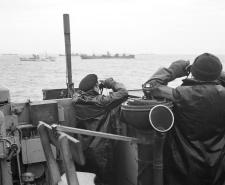
The Chinese resistance evidently made a strong impression on the wartime US president Franklin Delano Roosevelt. He called China one of the ’Four Policemen’ (alongside the US, UK and Soviet Union) he thought would be pivotal in securing world peace. China duly became one of the United Nations’ founding member countries in 1945.
Why has the Chinese war effort faded into obscurity?
After the Japanese surrender in late 1945, the Chinese Nationalists and Communists were quick to resume their previous mutual hostilities. The Communists eventually came out on top in the Chinese Civil War, consequently taking control of mainland China in 1949. The Nationalists retreated to the island of Taiwan.
For decades afterwards, the CCP would not have wanted to draw too much attention to the fact that it had once closely collaborated with the Nationalists. As a result, China’s contribution to the Allies’ victory over the Axis powers in World War II has long been unjustly perceived as peripheral. Only in relatively recent years have academics made a significant push to challenge this firmly entrenched narrative.
How else was China involved in WWII? You can get answers to probing questions like these when you subscribe to the Sky HISTORY newsletter.


