

‘If you don't include the stories of civilians, you aren't giving a voice to those who suffered’: Dan Carlin on WWII
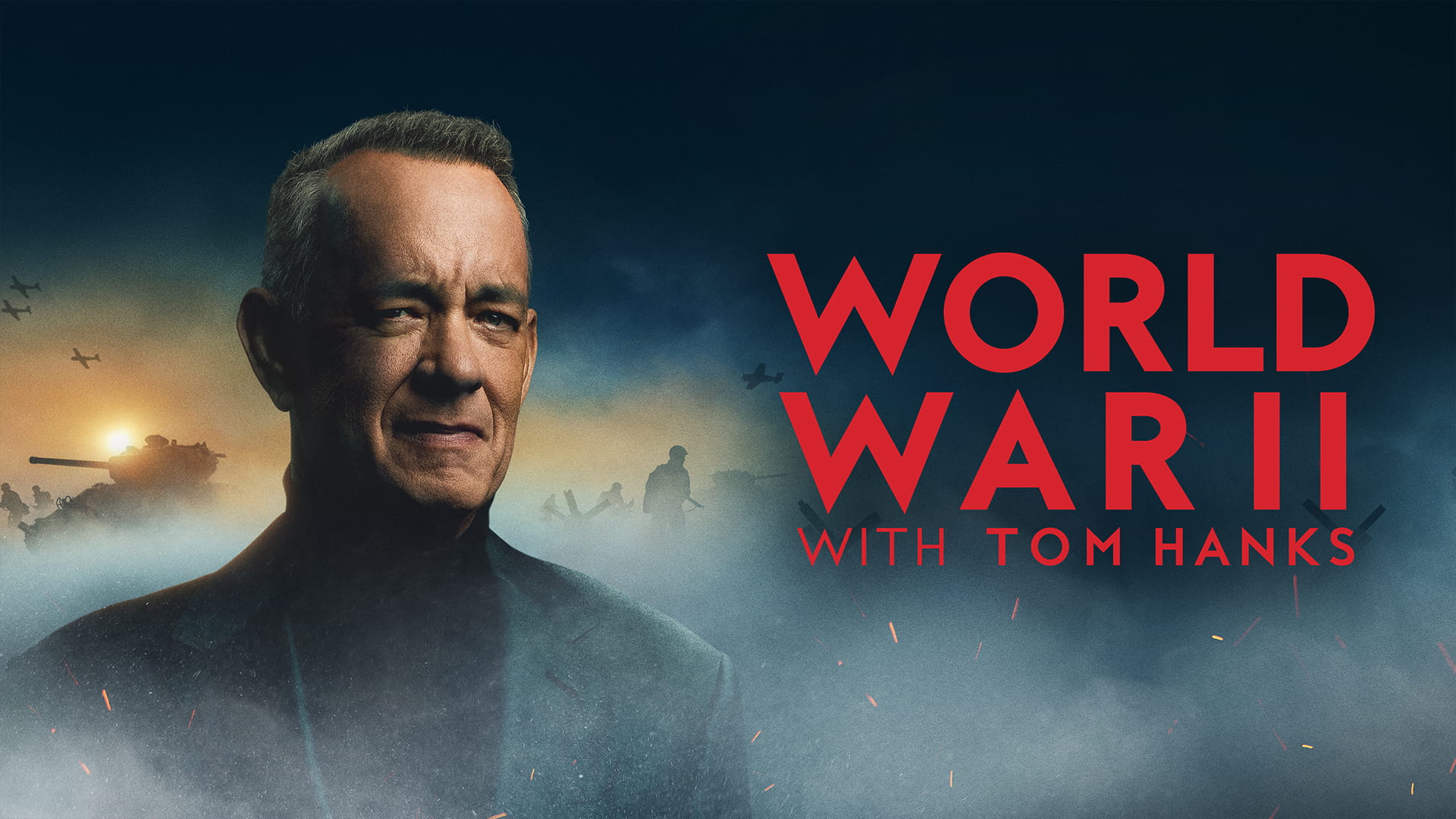
Dan Carlin of Hardcore History shares his unique perspective on WWII storytelling ahead of Sky HISTORY's new documentary, World War II with Tom Hanks, in which he appears as an expert contributor.
Image: Dan Carlin | World War II With Tom Hanks
If you’re interested in WWII history, chances are you’ve listened to Dan Carlin. Since launching Hardcore History in 2005, the American podcast host has become the byword for cinematic, captivating storytelling.
From his acclaimed Ghosts of the Ostfront series to Blueprint for Armageddon, Carlin’s podcast attracts millions of listeners from both sides of the Atlantic. It also gives him unique insight into how the war is viewed from both American and British perspectives.
Dan is just one of many incredible contributors to Sky HISTORY’s highly anticipated new documentary, World War II with Tom Hanks. Ahead of the first episode on Tuesday, 26th May, he kindly took time out of his busy schedule to discuss some of the biggest talking points.
Why WWII still matters
Eight decades on from the end of the world’s deadliest conflict, some may wonder if any stories remain untold. But at a time of increased global tension, for Carlin there’s still great importance in keeping the memories of the war alive for current and future generations.
‘There are two ways we humans learn about things like the Second World War. We can hear about those who metaphorically touched historical hot stoves and what they experienced as a result, or we can do so ourselves,’ he says. ‘If we listen to the voices of the past, maybe we can learn enough collectively from them to avoid our own equivalent of the hot stove that scorched their entire era. No one should want to learn about a world war via personal experience.’
Yet the challenge of telling the story of WWII is significant - even for an as adept storyteller as Dan. In World War II with Tom Hanks, the Hollywood icon summarises it as ‘the world being on fire for six dark years’. And as Carlin explains, the war’s vast scale often makes it difficult to tell the story straightforwardly.
‘The war raged over such a huge geographic zone you can't tell the story without jumping around from one part of the globe and then back to another,’ he says. ‘Those create real difficulties giving a sense of how much is happening at any given time. It also makes it extremely hard to tell the story from start to finish without having to repeatedly go backwards in the chronology as the story switches global theatres.’
Despite this, Hardcore History’s popularity is a clear indication of Carlin’s ability to break down complex stories and make them engaging. The podcast has received praise not just for focusing on key figures and battles, but also for the often-overlooked accounts of the ordinary people who lived through the war.
‘The Second World War was the worst war ever in terms of civilians becoming victims. They really don't know how many died, but estimates of 40 million non-combatants are common. The majority of the deaths in the entire event were civilian. So it's a sign of the conflict's brutality that non-military personnel bore the brunt of it,’ he explains while discussing his storytelling approach. ‘If you don't include the stories of civilians, you aren't giving a voice to the majority of those who suffered and died.’
Sharing stories from an often overlooked theatre of war
The Eastern Front was the most lethal theatre of WWII, accounting for an estimated 30 million deaths, nearly half of all casualties in the entire war. For decades, the full scale of the appalling human toll has been relatively unknown in comparison to the well-documented events of D-Day and Pearl Harbor.
It’s an area that Carlin focuses on specifically in his four-part, critically acclaimed Ghost of the Ostfront series. He agrees that the theatre has often been overlooked by the Western world, but believes that it is now starting to receive the recognition it deserves.
‘It's natural for those of us from Western Allied nations to focus on campaigns that involved us, but the sheer scale, scope and impact of the Eastern Front is just overwhelming,’ he argues. ‘You can't ignore it because what happens there has a ricochet effect on multiple other theatres. If you care about understanding how the outcome of that war happened, you have to pay close attention to the Eastern Front.’
The Eastern Front is also covered in detail in the documentary. In addition to Carlin, analysis and commentary are provided by a range of experts, including military historian Sir Antony Beevor, the author of the best-selling book, Stalingrad.
Considering alternative outcomes
World War II with Tom Hanks is a sweeping and fresh retelling of the war, with every key moment analysed and revisited in 2026. While many of the best-known stories will be familiar to viewers, it remains fascinating to consider how events could have unfolded differently with quirks of fate.
The Battle of Britain is widely acknowledged as one of the decisive turning points of the war. Yet experts have long attempted to answer a simple yet sinister alternative outcome - what if Britain had lost? Dan argues that such an event was always unlikely.
‘I am not even sure what a German “win” would have looked like. But that doesn't make the event itself any less heroic or important,’ he says. ‘We must recall that German momentum at that point in the war was overwhelming. And these sorts of mass aerial attacks and city bombings were new. There were conflicting theories on its use. Many felt that civilian populations would crack under sustained bombing.
The British civilians proved this wrong, however, by enduring weeks of it at a time. And the Allied pilots were brilliant. They gave the Germans their first serious reverse in the war. Its effects, especially morally and psychologically, are hard to overstate.’

The stories that never make it onto screen
While Carlin’s podcast audience is predominantly American, he also attracts a sizeable British audience too. It means he’s well placed to reflect on how the two countries tell, and sometimes don't tell, the story of the war.
Given that American culture has done so much to shape the wider WWII narrative, from Saving Private Ryan to Band of Brothers, the question is whether some stories inevitably fall through the cracks.
‘Clearly, the U.S. perspective puts Americans front and centre. All nations do this, but the influence of U.S. media means many other nations get to see the American version of things. And obviously much gets overlooked,’ he agrees. He points to the Soviet contribution and Chinese involvement as two key areas.
‘So much of the Soviet contribution was reflected through the U.S. Cold War lens, for example. The Chinese experience is often filtered through how China's situation intersected with the efforts of the Western Allies, as opposed to focusing on the large military campaigns the Chinese fought.’
Yet it isn't just the stories of other nations that risk being diluted by the popular narrative. Even the relationship at the heart of the Allied war effort, the partnership between Britain and the United States, is rarely represented in its full, complicated reality.
The Anglo-American alliance was essential to victory, but behind the scenes it was also defined by rivalry, tension and competing priorities. Dan agrees that popular portrayals of WWII tend to smooth over just how difficult that relationship really was.
‘Of course they sometimes do, but there's so much popular material about this subject that one can't generalise too much. Most portrayals usually aren't focused on the command level or political level where these issues usually crop up. So they often aren't germane to the specific story being told.’
He cites the 1970 film Patton as being a good depiction of the tension that existed between the different nations: ‘With the Anglo-American friction being so much a part of the Patton tale, it would have been hard to leave out!
Why there's no such thing as too much WWII history
As Sky HISTORY’s interview with Dan draws to a close, it feels fitting to reflect on what has made Carlin such a popular voice in the world of military history. Hardcore History has reached audiences who might never normally pick up a history book. So what has that loyal, engaged listenership taught him about the public's appetite for long-form history?
'They taught me that there are a lot of folk just like me out there,' he says. 'They also opened the door for us to take as long as we do to tell these stories, because the listeners always encouraged us to use the time we needed to do justice to the events. "We have pause buttons," they told me. It was a major revelation for us, and it changed the way we approached and handled the subject matter.'
The message is simple: some stories are just too important to rush - and there’s arguably no story more important than the war that shaped the modern world. If Carlin's listeners have proven anything, it's that when history is told well, no one is reaching for the pause button.
Don’t miss World War II with Tom Hanks, airing exclusively on Sky HISTORY from Tuesday 26th May at 9pm. Want to explore more WWII history? Subscribe to the Sky HISTORY newsletter today.


