
World War II with Tom Hanks: How Bletchley Park became a hive of codebreaking activity
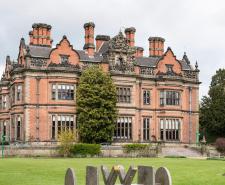
Bletchley Park looks like an unassuming mansion. During World War II, it was at the heart of the Allied drive to unlock the Nazis’ notorious Enigma code.
Image: Enigma machine used to decode messages during WWII | lenscap50 / stock.adobe.com
World War II wasn’t just won on the sodden battlefields of Europe, North Africa and Southeast Asia. In fact, it was first won in the codebreaking huts secretly making up the Buckinghamshire estate of Bletchley Park.
Here, thousands of mathematicians, logicians and clerical staff worked diligently to decode encrypted radio messages transmitted by Axis forces. This meant breaking Nazi Germany’s ‘Enigma’ and ‘Lorenz’ cyphers.
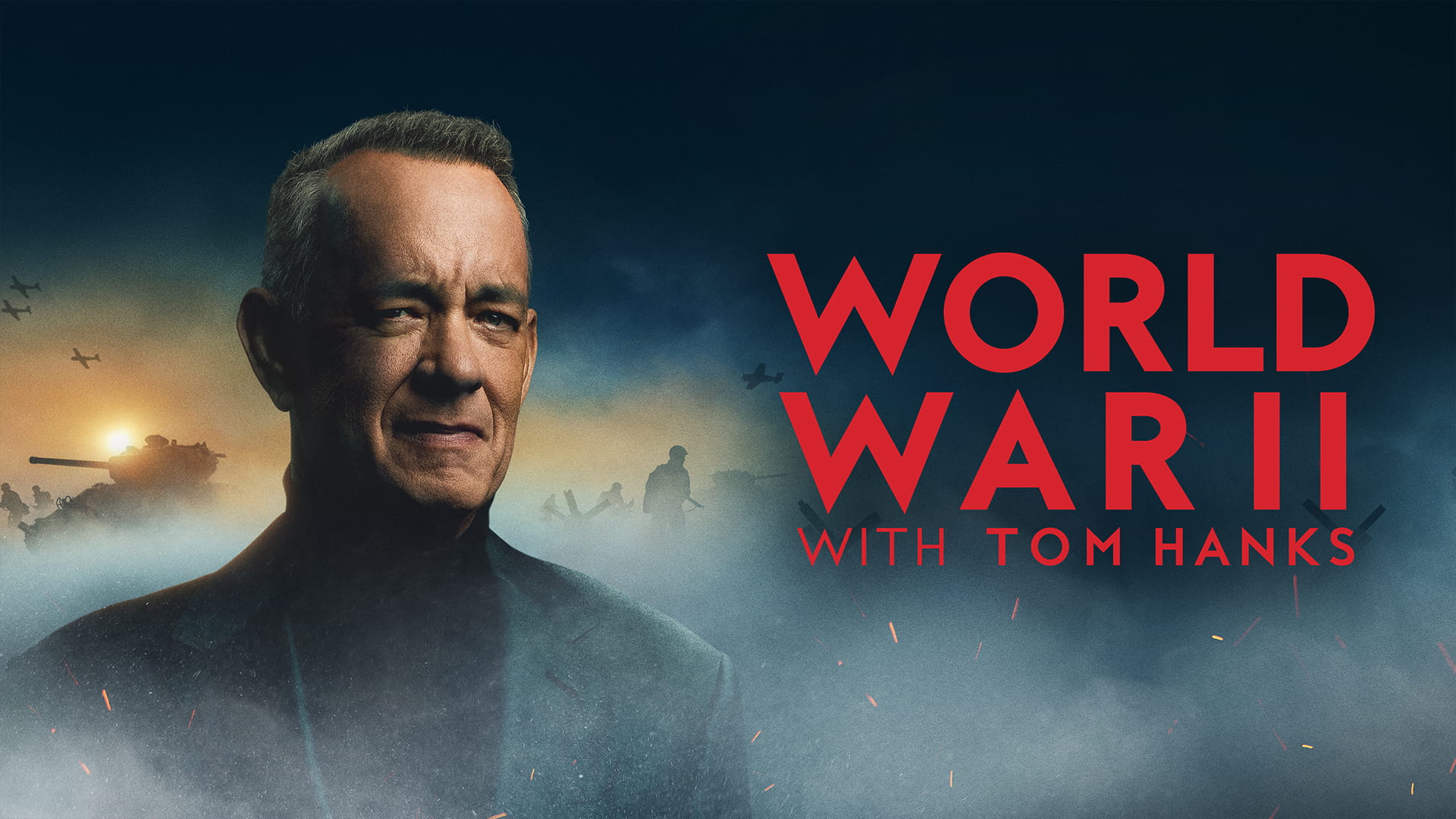
The ninth episode of World War II with Tom Hanks goes behind the scenes to see what really went on at Bletchley Park. The Sky HISTORY docuseries also features a wide array of experts with a lot to say about the Allies’ espionage efforts.
The inauspicious origins of Bletchley Park
Bletchley Park is nestled in a relatively quiet area of Buckinghamshire. Today, you can visit this country house and admire its quaint architecture before stepping inside. In the 21st century, it has been lovingly restored and converted into a museum paying tribute to its former life as a codebreaking centre.
From the outside, it looks akin to Downton Abbey – more like a well-to-do baronet’s private home than a government building. Indeed, the former is exactly what it used to be when it was bought by Sir Herbert Samuel Leon in 1883. The property had been developed only a few years earlier by architect Samuel Lipscomb Seckham.
The house remained in the ownership of the Leon family until the late 1930s. It was soon bought by MI6 head Admiral Sir Hugh Sinclair, who saw its potential as a suitably secluded workplace for members of his agency.
Who was the famed mathematician Alan Turing?
In World War II with Tom Hanks, author Sir Dermot Turing enthuses: ‘Let me tell you a bit about my uncle Alan Turing. He has always been interested in everything to do with science and maths. He likes the planets. He likes chemistry, he likes genetics. But what he’s really, really interested in is logic problems. Mathematical logic.’
Turing got his big break at Cambridge University, where he met a mathematics lecturer called Max Newman. Dermot explains: ‘Max Newman is presenting a fundamental series of mathematical problems which are vexing the world’s most talented mathematical brains at the time.’
According to Dermot, Newman posed a big question to his students. ‘Is there a process that you could apply, let’s say a mechanical process, to test whether a theorem is provable or not?’ Alan spent ‘the next six months coming up with what is now considered to be one of the most fundamental papers in mathematical theory.’
Dermot says of his uncle: ‘His reputation as a theoretician of mathematics is then assured, and he’s still in his mid-twenties. So he’s quite clearly a brilliant guy.’ As the war beckons, he also happens to be in the right place at the right time to apply this expertise where it is especially needed.
Bletchley Park finds an exciting new purpose
British politicians had already set up a signals intelligence agency, the Government Code and Cypher School (GC&CS), in 1919. Even the Enigma machine – the typewriter-like device used by the Germans to encrypt messages – was not alien to MI6 before World War II got underway.
The Polish Cypher Bureau had built its own Enigma in the 1930s. They even showed it to astonished British onlookers just weeks before Nazi Germany invaded Poland in 1939. The British took this curious contraption home with them and started using it to decrypt German military communications.
So, why was Bletchley Park chosen as the UK’s codebreaking hub? There were several factors. One, it was well-connected to stations that would receive the Germans’ wireless transmissions. Two, it was close to the ‘Varsity Line’ – a railway line serving the university cities of Oxford and Cambridge. This would help GC&CS to recruit bright young students as cryptographers.

Codebreaking: Britain’s secret weapon?
After Neville Chamberlain’s appeasement policy failed to prevent war, Winston Churchill replaced him as British prime minister in 1940. The effect of this change was far from immediate, as historian and broadcaster Dan Snow points out on the Sky HISTORY docuseries.
‘The first few weeks of Winston Churchill’s prime ministership are probably the worst and most disastrous weeks in the history of Britain. The most catastrophic defeat on the continent of Europe. Outclassed by the German Wehrmacht and the Luftwaffe in the skies. Britain is facing defeat and starvation.’
Robert Citino, senior historian at the National WWII Museum, concurs: ‘By 1940, the British position looks practically hopeless.’ When coming up against the Wehrmacht in Norway and Dunkirk, British forces ‘wound up running away, evacuating from the continent under fire.’
The British needed to make up for their lack of military might. Fortunately, they had spotted an Achilles’ heel in the Wehrmacht’s ‘blitzkrieg’ tactics. To make this ferocious new style of warfare work, German officers had to use radio to communicate with each other in real time.
Citino observes: ‘If someone can step into that communications loop, they can intercept German reconnaissance reports, German orders, they can intercept German intentions.’ Marianopolis College professor David O’Keefe remarks: ‘It provides an incredible force multiplier, particularly when you’re outnumbered.’
What made Enigma a tough nut to crack?
How did the Enigma machine work? David Abrutat, official historian at GCHQ, explains: ‘You press the key and that instigates an electric pulse that would run through a set of rotors. As they turn it produces what we call ciphertext. If you press the D, it would come out as the T. If you press the D again, it would not come out as a T again. It would come out as a Z or some other random letter.’
The rotors could be set up in 17,500 different ways. However, the Germans also added a plug board that multiplied the total number of potential configurations still further — to 156 million million million. No wonder the Nazis thought the Enigma code was practically unbreakable.
Not that the British shared that view – certainly not key Bletchley Park recruit Alan Turing. He knew that the code wouldn’t be possible to break entirely by hand. For this job, his team needed a special machine – the Bombe. German signals were decrypted with this electromechanical device’s help and translated into English.
This intelligence was later fed to commanders in the field, enabling them to shift their strategy accordingly. Historian and author Guy Walters hails Bletchley Park as ‘absolutely vital for the British defence in the Battle of Britain. Why? Because it reveals the Luftwaffe order of battle. So you can see who’s going where, when.’
How important was Bletchley Park?
The Bletchley Park workforce’s size peaked at almost 10,000 people. Abrutat explains: ‘It wasn’t just producing material for Europe. It was producing intelligence from North Africa and the Middle East, the Far East. This was a global war and it needed global intelligence.’
Britain’s prowess in espionage helped it to bring the United States into the war on the Allied side. Historian and former CIA officer Nicholas Reynolds admits that the American intelligence service is ‘at a pre-industrial stage before Pearl Harbor occurs.’
Conversely, historian and author Tessa Dunlop reveals that by 1942, ‘you have an unprecedented trans-Atlantic collaboration, intelligence sharing on every level. The Americans are in every department in Bletchley Park working alongside Britain.’
The codebreaking work at Bletchley Park is said to have shortened the war by about two years. In 1954, Alan Turing died in tragic circumstances, aged just 41. Today, his image features on the £50 banknote. Recent years have seen the deaths of several Bletchley veterans, including Margaret Betts in 2023 and Betty Webb and Ruth Bourne in 2025.
Catch the Bletchley Park episode of World War II with Tom Hanks on Sky HISTORY or HISTORY Play – and for more on Britain's wartime history, sign up to the Sky HISTORY newsletter. Every week, you'll receive the latest articles, episodes and more delivered straight to your inbox.


