

World War II with Tom Hanks: How close did D-Day come to disaster?
How close did D-Day really come to disaster? WWII With Tom Hanks uncovers the storms, setbacks and command failures behind the Normandy landings.
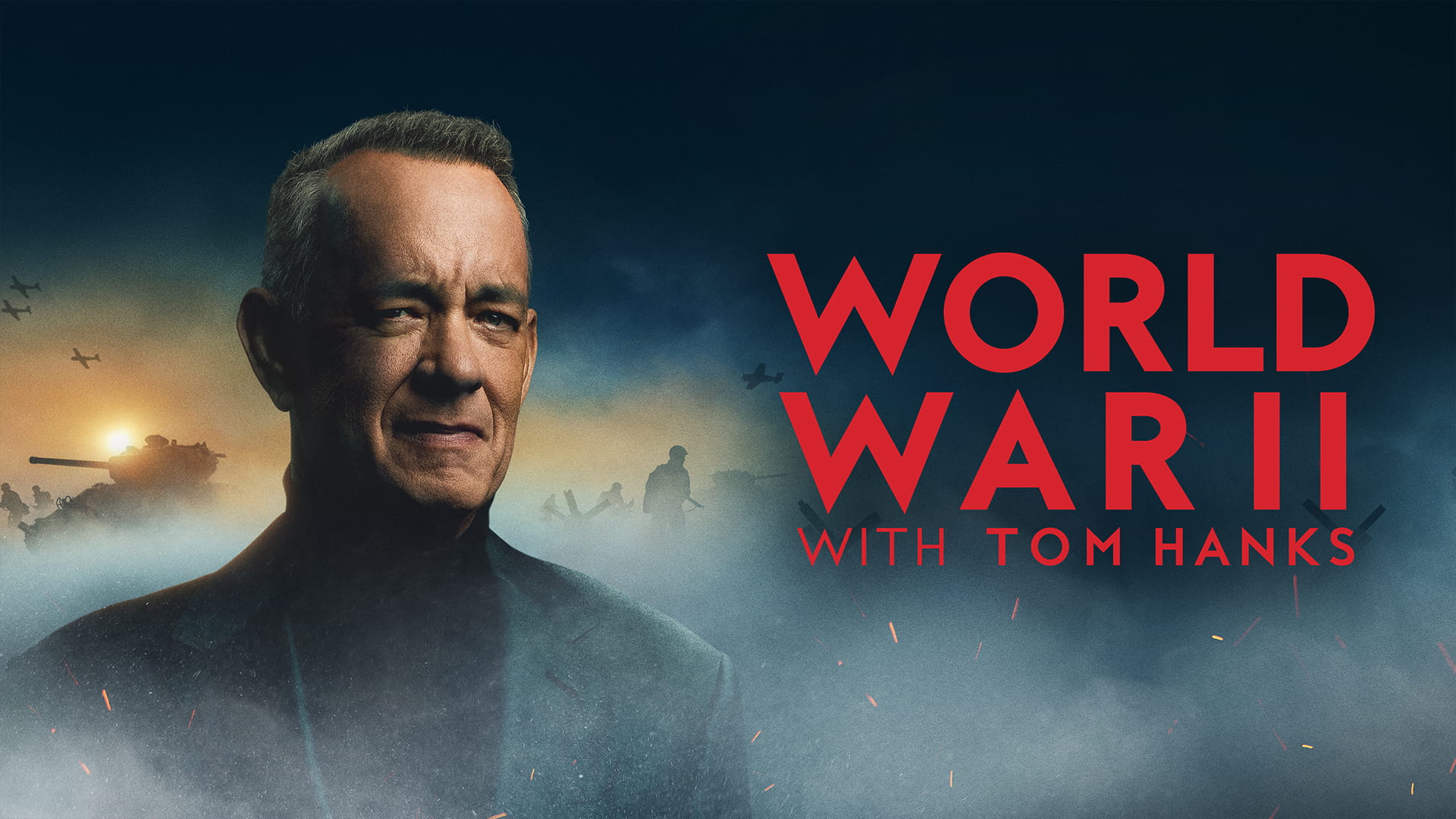
Image: World War II With Tom Hanks
On the evening of 5th June 1944, General Dwight D. Eisenhower sat down and wrote a note that he hoped no one would ever need to read. ‘If any blame or fault is attached to the attempt,’ he wrote, ‘it is mine alone.’ Operation Overlord hadn't happened yet. He was preparing for failure.
That note, and the extraordinary weight of command behind it, sits at the heart of the D-Day episode of World War II with Tom Hanks, airing on Sky HISTORY to mark the anniversary of the Normandy landings.
It's a reminder that the story of D-Day is not simply one of Allied triumph. It is, at almost every turn, a story of how close the whole thing came to going catastrophically wrong.
The arguments that nearly sank Overlord before it began
The episode traces Operation Overlord from its origins at the Tehran Conference in late 1943, where the Allied leaders finally agreed to commit to a cross-channel invasion, to the bloody reality of 6th June itself. What emerges is less a victory parade and more a portrait of accumulated risk – strategic, logistical, meteorological – stacked high enough to make the outcome feel anything but inevitable.
The disagreements started at the top. Churchill, scarred by the carnage of the First World War, had long resisted a direct assault on France. As Hardcore History host, Dan Carlin, explains: ‘The idea of gambling everything on a cross-channel invasion into France, the exact place that so many terrible things happened in trench warfare back in the First World War – all that mattered was we don't do that again.’
It took American pressure from Roosevelt, Soviet insistence from Stalin, and the Tehran summit to finally settle the argument.
The secret rehearsal that killed 700
Perhaps one of the lesser-known stories of D-Day was the disastrous rehearsal, known as Exercise Tiger, that took place just two months before.
In late April 1944, Allied forces rehearsed the landings at Slapton Sands in Devon, a stretch of coastline chosen precisely because it resembled Normandy. The villages’ 3,000 residents were evacuated from the area so that the exercise could be conducted in total secrecy. At such a pivotal moment in the war, nothing could be left to chance – and operational security was paramount.
Yet the exercise could hardly have gone worse. A breakdown in communication leads to the Navy firing at its own men. Later, in the middle of the night, a pack of German E-boats stumbled upon the exercise and sank three large ships laden with personnel and tanks. More than 700 men were killed – a figure that would be covered up for years.

The disaster shook confidence in the whole mission. Professor Michel Paradis of Columbia University sums it up neatly in the documentary: ‘If a well-controlled dress rehearsal goes this badly under the best of possible conditions, what's going to happen when they can't just stroll ashore on a British resort town, but are being fired at by German guns?’
The storm that almost stopped everything
Exercise Tiger was far from the only setback the Allies encountered. In fact, the weather came perilously close to scuppering the invasion entirely.
By early June, with over two and a half million troops massed across southeast England, General Eisenhower had a three-day window, in which the tides, the moon and the conditions had to align.
But when meteorologist Group Captain James Stagg delivered the news that a storm was coming, the invasion had to be postponed. As author and Normandy battlefield guide, Paul Woodadge, explains, the pressure on Eisenhower at that moment was immense: ‘You've got all these hundreds of thousands of men in camps who've been sharpened to this edge of ready to go in and get their job. Then you've gotta say to them, “Actually, no, sorry lads. We're gonna back down again.”’
Ironically, the storm that so nearly derailed the Allies actually worked in their favour in one crucial respect. The Germans, lacking weather stations in the Atlantic, never saw the brief window of improvement coming. Across the Channel, Erwin Rommel was so confident that poor weather would prevent any imminent invasion, he left France to celebrate his wife’s birthday in Germany. It would prove to be a catastrophic miscalculation.

The rescheduled date was 6th June, and even then, the weather was far from ideal. Woodadge vividly describes the conditions the men would have faced on the journey across. ‘The waves are swamping over the sides. You're standing in freezing cold water. If one vomits, you all vomit. The longer that goes on, the more you are thinking to yourself, “What is gonna happen when that ramp goes down?”’
The bloodiest beach and the German failures that sealed Allied victory
At Omaha Beach, the answer was devastating. The episode doesn't flinch from the scale of what happened there – roughly 85% killed or wounded in the first assault waves, 85 machine guns laying down fire as men staggered through the surf.
Yet as Carlin explains, the stakes for the operation’s success couldn’t be higher. ‘Failure is another Dunkirk. Failure's the loss of all your equipment. Failure is your troops being marched off into captivity. If everything goes wrong, it means a longer war.’
But even as the carnage unfolded on the sand, the Germans were failing to capitalise. Hitler had reserved control of the Panzer divisions for himself, and they could only be deployed on his personal order. On the morning of 6th June, he was asleep, and nobody dared wake him. In those crucial early hours, the German response was paralysed at the very top.

It was left to individual acts of bravery to turn the tide at Omaha. US Army Rangers scaled 100-foot cliffs at Pointe du Hoc under fire. Corporal Waverly Woodson, a medic wounded before he even reached the beach, went on to treat almost 200 men under intense mortar and machine gun fire. Momentum shifted slowly, painfully, through sheer force of human will.
Why WWII with Tom Hanks is essential viewing this anniversary
The combination of Allied resilience and German command failure is what World War II with Tom Hanks captures so well, drawing on a roster of military historians, analysts, and presidential biographers to pull the story apart from multiple angles. Seen through their eyes, the events of 6th June 1944 look rather different from the clean narrative of triumph we might expect
By the end of D-Day, all five beaches had been secured. The second front was open. But as Professor Paradis notes, Eisenhower understood better than anyone that the real fighting on the continent was only just beginning.
More than eighty years on, the question of how D-Day succeeded – against the weather, the odds and the weight of its own complexity – remains one of the most compelling in modern history. World War II With Tom Hanks makes a strong case that we still haven't finished answering it.
Watch World War II with Tom Hanks, airing now exclusively on Sky HISTORY. Want to explore more WWII content? Subscribe to the Sky HISTORY newsletter today. Every week, you’ll receive articles, interviews and clips from the documentary delivered straight to your inbox.


