

Why the Maginot Line failed to stop the Nazis
The Maginot Line, built in the 1930s, was supposed to save France from a World War I-style drubbing. So, why did France quickly fall to the Nazis in 1940?
Image: The Maginot Line was a series of fortifications along the French-German border during the interwar period | stock.adobe.com

France’s fall to the Nazis early in the Second World War is one of Gallic history’s most ignominious chapters. It’s all the more tragic when you consider the far-reaching measures that France had taken to prevent it from happening in the first place.
Exactly how far-reaching? Hundreds of miles. That’s how long the Maginot Line, the series of fortifications built by the French in the interwar period, ran along the French-German border. In the event, however, the formidable Nazi forces conquered France within just two months of invading in the summer of 1940.
Wasn’t the Maginot Line supposed to be impenetrable? Why did it fail to stop the Nazis from advancing? We at Sky HISTORY look at these questions afresh as our new docuseries, World War II with Tom Hanks, provides further insight into France’s collapse.
Why was the Maginot Line built?
The French have a long history of fortifying their borders against the threat of foreign invasion. Centuries-long, in fact. Unfortunately, this defensive tradition did not save France from devastating ruin during World War I, which largely took place on French turf.
Though France was ultimately on the winning side in that war, more than a million Frenchmen lost their lives. French politicians also feared that the defeated Germany would, sooner or later, strike again.
So, France was willing to spend billions of francs on a new string of tough fortifications along the border. The Maginot Line was named after the French Minister of War André Maginot, who persuaded the French Parliament to back the project.
Contrary to later myth, the Maginot Line was not intended to provide, all by itself, a watertight defence against German encroachment. The French considered this idea impractical. The actual idea was simply to slow down any hypothetical German invasion enough for the French army to mobilise in time to meet the threat.
What was the Maginot Line?
The Maginot Line was not a single, consistent barrier in the same way as the Great Wall of China or Hadrian’s Wall. It would be more accurate to describe it as a loosely arranged series of military facilities linked together by underground railway lines.
Along the edge of French territory sat thousands of blockhouses where troops watched out for any surprise attacks from the other side of the border. Behind these blockhouses lay hundreds of tank traps, bunkers and ‘ouvrages’ (fortresses).
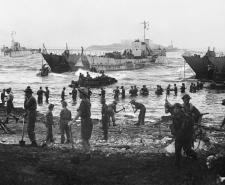
The Maginot Line ran from the Swiss Alps in the south and snaked towards the Belgian border, but didn’t quite close it off. This was deliberate, as France had signed a defence pact with Belgium and did not want to appear to be backing out of this deal.
How the Nazis conquered France
Even after World War II was declared in September 1939, the French had what you might call a false sense of security. Though the Maginot Line was much weaker near the Ardennes Forest, this wooded area was thought too tricky for invasion forces to traverse.
When the Germans attacked France in the summer of 1940, they set foot in Belgium first, as the French had envisioned. What the French hadn’t expected was how quickly the Germans were able to overrun the Ardennes by employing unprecedented ‘blitzkrieg’ tactics.
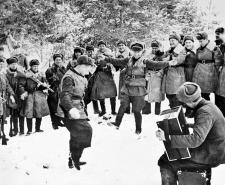
The British Expeditionary Force (BEF) rushed to help French troops repel the incoming Nazis. The Anglo-French forces soon found themselves hemmed into a pocket of northeast France and hopelessly outnumbered, leading to the Dunkirk evacuation. The Nazis would occupy France until its liberation by Allied forces in 1944.
The legacy of the Maginot Line
The Maginot Line has had a very bad press over the years, but historians have rushed to salvage its reputation. According to scholarly opinion, the Maginot Line actually served its intended purpose in that it did hinder the Nazi attempt at invasion.
For the most part, the Wehrmacht avoided directly attacking the Maginot Line, which had always meant to serve as a deterrent. France’s real big mistake was failing to sufficiently prepare for a new age of warfare where fixed fortifications would have to be used more sparingly.
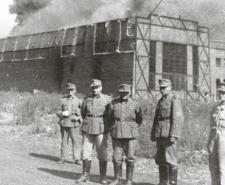
In essence, the problem wasn’t so much the Maginot Line itself but instead France’s broader military strategy, which had failed to adapt to the times. Fighting units of World War II were much more mobile and mechanised than those of the ‘Great War’, where attritional trench warfare had held sway.
Has reading about the Maginot Line left you wondering about other defensive military installations of the past? Satisfy your curiosity by subscribing to the Sky HISTORY newsletter.


