
'It was a global war that changed global history': Interview with Sir Antony Beevor ahead of World War II with Tom Hanks
Ahead of World War II with Tom Hanks airing on Sky HISTORY, Sir Antony Beevor reflects on why now is the ideal time for a new documentary.
Image: Sir Antony Beevor | World War II With Tom Hanks
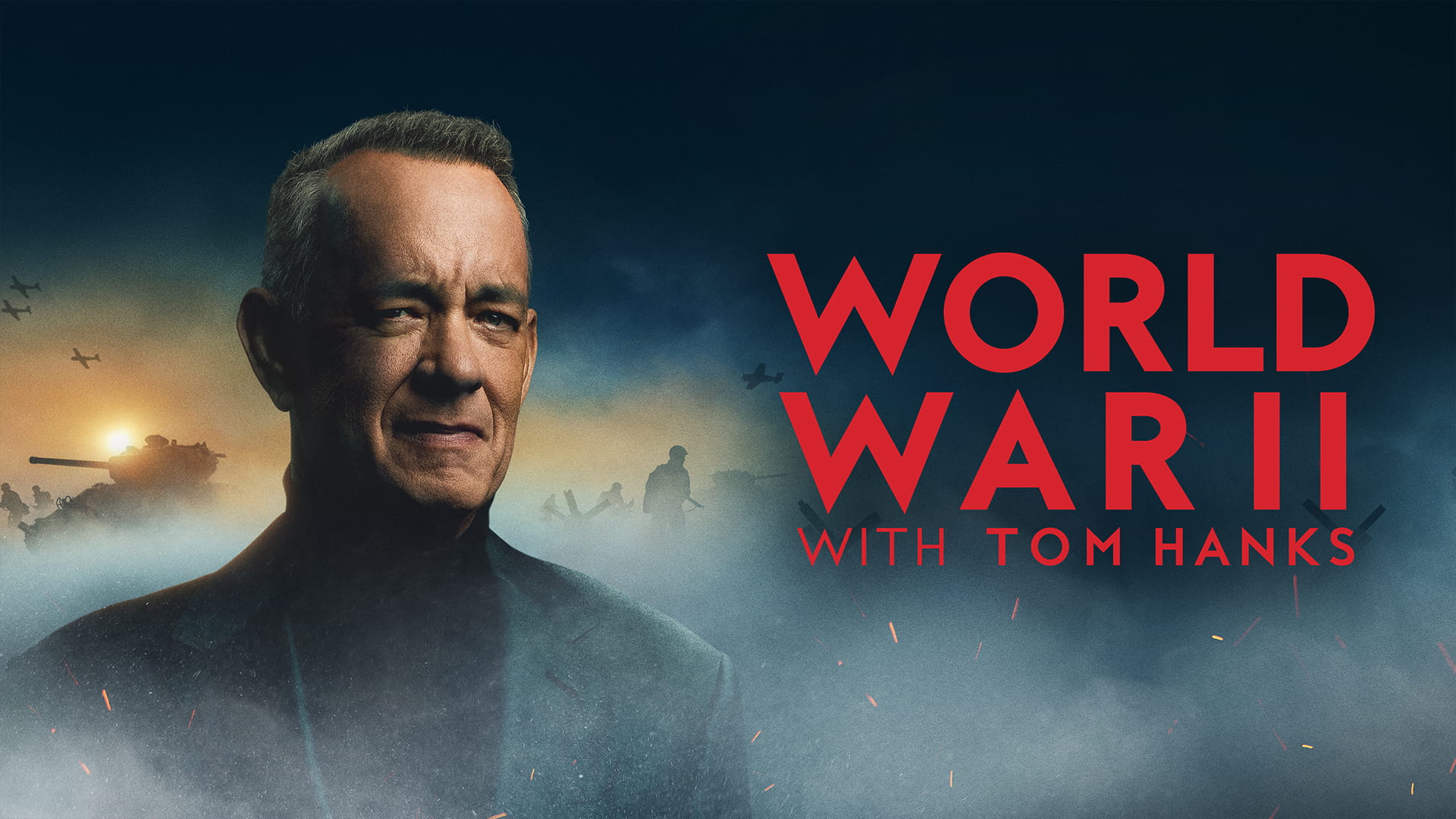
Over 80 years after the conclusion of World War II, a new documentary promises to shed light on the conflict like never before. World War II with Tom Hanks, coming to Sky HISTORY from Tuesday 26th May, is an eagerly anticipated sweeping and fresh retelling of the war.
But it’s not just Tom Hanks’ involvement that makes the series stand out. As well as rarely seen archival material, the series also features evocative storytelling and insight from a plethora of leading historians from around the world.
Sir Antony Beevor is just one of the rich list of contributors. An acclaimed historian and writer, he has published numerous popular historical works, including Stalingrad and Berlin: The Downfall 1945.
Ahead of the first episode, Sir Antony kindly shared his time with Sky HISTORY to discuss why now is an ideal moment for the documentary.
The importance of telling WWII stories today
At a time when the number of veterans and civilians with living memories of WWII continues to rapidly dwindle, Sir Antony is clear on the importance of a documentary like World War II with Tom Hanks.
‘The Second World War is definitely, without doubt, the most formative experience which Europe, the United States and the world has ever seen,’ Sir Antony begins. ‘It was a global war, and it meant that it changed global history. In fact, it brought global history together for the very first time.’
He points to the war accelerating the end of colonialism in the Far East, Africa and Asia as just one of the many ways the world changed in its aftermath. Yet with so many books, films and documentaries already in existence about the conflict, is there really anything left to say? For Sir Antony, the answer is an emphatic yes.
‘Everybody talked about The World at War, which was the very first of all of the [World War II] programmes in a way. It was a superb and extraordinary achievement at the time, interviewing people who had been active participants, and also with the voice of Laurence Olivier. It really did start to give people a view of the war as a whole. But those were early days,’ he explains.
‘Now, obviously, there is a lot more that needs to be said. There have been a lot of changes in historical attitudes to the Second World War. So it's certainly time that there was a new series.’
An often overlooked theatre of the war
World War II with Tom Hanks aims to provide viewers with a new perspective on the war, and includes an authoritative look at the Eastern Front. Despite being the deadliest land conflict in the war, for decades it has often been overlooked by the West. The horrors of Stalingrad and Kursk are relatively unknown compared to the well-documented nature of D-Day and Pearl Harbor.
Yet Sir Antony argues that a key reason for this was the Soviet authorities, who were reluctant to share the full appalling scale of this theatre of the war to the outside world.
‘Even Stalin himself would only admit to seven million deaths in the Soviet Union during the Second World War, when in fact, the figure was nearly four times greater. He came up with a figure of seven million deaths, thinking that sounded suitably heroic, but not criminally homicidal. But that was actually covering it up.’
Beevor is clear that the Eastern Front remains a crucial area to understand when covering WWII history, due to what he describes as the ‘sheer pitilessness’ of the Soviet commanders.
‘No British army, no French army, no American army would have survived at Stalingrad because of the sheer brutality of the fighting,’ he asserts. ‘They all had views or assumptions that you fought on until a certain level of suffering, and then you were allowed to surrender. The Red Army was not allowed any form of surrender in that particular way. It was completely pitiless.’
Sir Antony’s expertise on the Eastern Front is exhaustive, having published the critically acclaimed book, Stalingrad, in 1998. It’s considered the definitive account of the Battle of Stalingrad, yet he dismisses the title: ‘By definition, no book can be definitive because there's always possibly more material to emerge or different attitudes.’
‘But I was phenomenally lucky in timing because [Rudolf] Pikhoya, who was the Minister of the Archives under Yeltsin, had suddenly forced the Russian military to open their archives and they didn't know how to handle it,’ he explains. ‘For me, this was an extraordinary opportunity, especially because it was 1994-1995 when we started working in the Russian archives.’
‘Writing a book depends on timing,’ he continues. ‘If you get the timing right, or you're fortunate in timing, then you have a huge advantage. So yes, we were the first to be able to see this material. And of course, it's now completely closed down to foreign researchers.’

D-Day, Hitler and Stalin
June 2026 marks the 82nd anniversary of the Normandy D-Day landings. Compared with the Eastern Front, it’s a story that many will be more familiar with and is covered in detail in the new documentary.
Yet as Sir Antony explains, even the most meticulously planned operation in military history was not immune to the whims of chance. For all the brilliance of the Allied strategy, the success of the landings relied heavily on good fortune and in particular, the weather.
‘The good luck in the case of Normandy was getting the right break in the weather so that they could land at a time on 6th June when the Germans thought that the weather conditions were too bad to allow an invasion fleet to come through,’ he says.
‘If, for example, they had been forced to postpone the invasion, the next available point would have actually landed them in the worst storm that the English Channel had ever seen, which would have actually destroyed most of the invasion fleet and would have pushed back the liberation of France by, if not six months, more likely almost a year. So, the whole map of Europe would have been totally different. This is where such huge matters rest on the basis of comparatively small details.’
The documentary also examines the respective roles and fortunes of Adolf Hitler and Joseph Stalin, a comparison that Sir Antony finds particularly compelling.

‘It's fascinating to see the difference between Hitler and Stalin, the way that Stalin was utterly disastrous at the beginning of the Eastern Front War in 1941 and most of 1942, but then he started to learn from his own mistakes and became an effective war leader.’
‘Hitler, on the other hand, had proved an instinctive genius in 1940, but very rapidly, as a military thinker, became worse and worse. He became simply an obsessive, refusing to retreat even when it was essential. So you see two different developments, two different axes, between Hitler and Stalin in that particular way.’
The stories still left to tell
World War II with Tom Hanks is a comprehensive retelling of the war, and is essential viewing for anyone with an interest in WWII history. Yet for all the unbelievable stories and tales of heroism featured, Sir Antony is hopeful that this chapter of history is far from finished being written.
He cites the remarkable story of Yang Kyoungjong, a Korean soldier discovered by American paratroopers in Normandy on D-Day itself as one that has never quite received the attention it deserves.
'He'd been forced into the Japanese army, captured at the Battle of Khalkhin Gol by the Russians, forced into the Red Army, and then captured by the Germans, forced into the German army, and finally captured by the Americans in Normandy. For me, that was a story not so much because of the individual, but it showed what a global war it was, and how little control people had over their own fate.'
It's a story that neatly captures what Sir Antony hopes viewers will ultimately take away from Sky HISTORY’s new documentary – not a sweeping generalisation, but a deeper, more honest reckoning with the war's complexity.
'The one thing that people need to take away is that you cannot generalise,' he concludes. 'The duty of the historian and also the duty of the viewer and the reader is to understand, it's not to condemn. There were many horrors, there were evils, there were appalling things which happened in the Second World War. But the vital thing for everybody is to understand why they happened as they did.'
Don’t miss World War II with Tom Hanks, available on Sky HISTORY from Tuesday 26th May at 9pm. Want to explore more WWII history? Subscribe to the Sky HISTORY newsletter today. Every week, you’ll receive articles, insight and analysis on the biggest stories from history delivered straight to your inbox.


