
Greyhound: The true story behind Tom Hanks' WWII film
Greyhound is yet another acclaimed World War II-themed addition to Tom Hanks’ CV. So, how faithfully does the 2020 film portray the Battle of the Atlantic?
Image: Officers on the bridge of a destroyer during the Battle of the Atlantic | Public Domain
There’s no shortage of films set during World War II, but many of the most acclaimed have one particular thing in common. Yes, that’s right – Tom Hanks’ name in the credits.
There’s obviously his starring role in Steven Spielberg’s 1998 classic Saving Private Ryan. Hanks continued indulging his keen interest in the era by producing the TV series Band of Brothers and its follow-ups The Pacific and Masters of the Air.
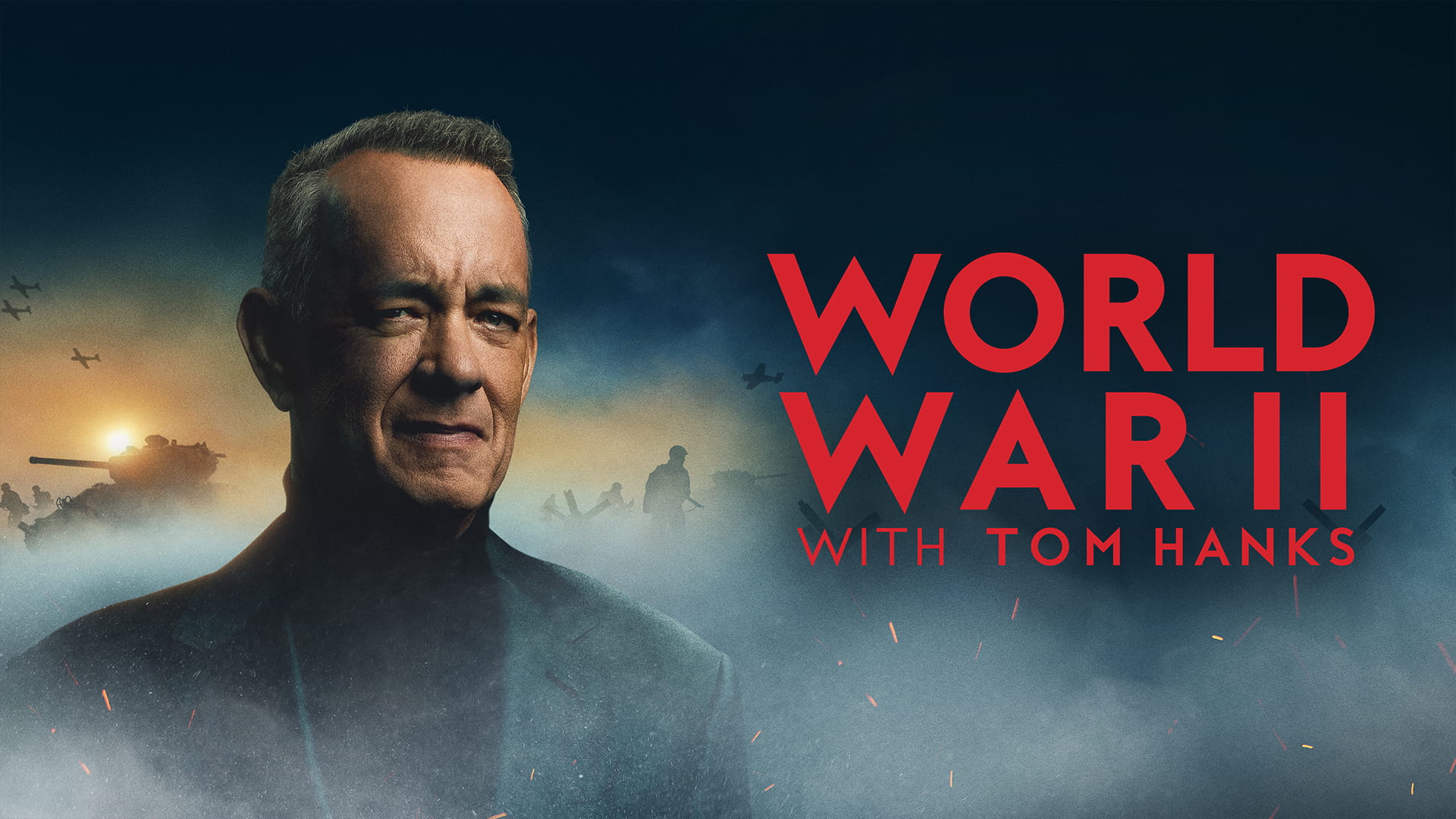
You can also expect to see Hanks on Sky HISTORY pretty soon, presenting the docuseries World War II with Tom Hanks, starting Tuesday, 26 May at 9pm.
However, you might have overlooked Hanks’ turn in the drama film Greyhound, which has become something of a sleeper hit since its 2020 release. Hanks plays a US Navy commander participating in the Battle of the Atlantic, but how historically accurate is it all? We at Sky HISTORY just had to find out.
What is the plot of Greyhound?
Greyhound takes place during the Battle of the Atlantic, which saw Allied powers shipping crucial resources across the Atlantic to support the European war effort. It was a job much easier said than done, as German U-boats would lurk in the waters, waiting to pounce on the Allied convoys.
Hanks plays Ernest Krause, commander of the destroyer warship USS Keeling. The film brings us to February 1942, with Krause leading a group of four destroyers escorting an Allied convoy en route to Liverpool.
The danger intensifies as the ships cross the ‘Black Pit’, an especially treacherous Atlantic area where the Allies are unable to provide air cover. Unsurprisingly, it’s not long before U-boats attack – and Krause and his crew have to act quickly to fend off these threats.
What was the Battle of the Atlantic actually like?
The name ‘Battle of the Atlantic’ is a misnomer – it was a lengthy military campaign rather than a one-off conflict. It ran from the European outbreak of World War II in 1939 right through to Nazi Germany’s surrender in 1945.
The characters in Greyhound are fictional – from Krause himself to his second-in-command Cole (Stephen Graham) and love Evie (Elisabeth Shue). USS Keeling, too, is fictional, but said to belong to the Fletcher destroyer class, which actually existed.
Ironically, the first Fletcher destroyers were only taken to sea months after the time the film is set. Also, in The Good Shepherd
(the 1955 C.S. Forester novel the film is based on), Keeling is of the Mahan class.
The filmmakers likely made the change because Greyhound was filmed aboard USS Kidd, a Fletcher-class destroyer still in its World War II configuration. Conversely, no Mahan-class destroyers are still intact today.
Did German U-boat commanders taunt Allied crews over the radio?
More than once in Greyhound, Krause’s crew hears a sinister German-accented (but English-speaking) voice emanating from Keeling’s radio system. The messages are apparently from a U-boat commander insisting that the men aboard Keeling will soon, so to speak, be sleeping with the fishes.
Hanks, who wrote the screenplay, presumably inserted these moments in a bid to rack up the tension. In reality, it’s unlikely that U-boat commanders would have taunted their adversaries in this way.
Sometimes, these commanders were able to eavesdrop on Allied radio transmissions by tuning into the relevant frequency. Still, it would have been pretty pointless of them to let the enemy know that they were listening in. This would only have given away their close presence, making it harder for them to launch surprise attacks on Allied ships.

Does Greyhound accurately reflect wartime life on the seas?
As detailed above, there are certainly factual inaccuracies in how Greyhound depicts the Battle of the Atlantic. However, when it comes to the more frenetic scenes, the battle tactics shown very much reflect those used by actual destroyer commanders.
Gordon Laco, a historical consultant on the film, reveals that one of Keeling’s encounters with a U-boat was inspired by a real-life incident. In 1942, the Canadian destroyer HMCS Assiniboine resorted to desperate measures to sink a U-boat on its tail.
‘They were literally blasting each other with pistols, rifles, revolvers,’ Laco told USA Today. ‘The cook even came out of the galley and threw an empty case of Coca Cola bottles down the submarine hatch.’ We can only hope to be treated to similar scenes in the upcoming Greyhound sequel, which began filming in February 2026.
To ‘sea’ what shows on maritime history we have coming up, just subscribe to the Sky HISTORY newsletter.


