
Tessa Dunlop on Ruth Bourne, an unsung hero of Bletchley Park
Dr Tessa Dunlop remembers Ruth Bourne, a Bletchley Park veteran whose wartime service offered a profound view of conflict, commemoration and freedom.

In this guest article, historian Dr Tessa Dunlop reflects on her friendship with the late Ruth Bourne, a Bletchley Park veteran. Drawing on their conversations about conflict, commemoration and the uneasy legacy of remembrance, Tessa explores how Ruth’s service as a Wren Bombe operative shaped the way she understood war, technology and freedom.
Tessa has written extensively on women’s contribution to the Second World War and is a contributor to the new docuseries World War II with Tom Hanks, available now on Sky HISTORY.
Ruth sighed. Liberal, Jewish and 98, she applied her standard perspicacity to my question of conflict and its long term impact and commemoration. ‘At the moment war seems to be a total disaster that doesn’t appear to benefit anybody.’
We spoke when Putin’s Russia was in its third year of pounding Ukraine and Israel was pulverising Gaza in response to the Hamas attacks of 7th October 2023. The recipient of the Légion d’honneur for her World War II service and informed by a young life cast in the shadow of an enormous conflagration, 80 years later she was still trying to make sense of a world that would prefer to forget the horrors of global conflict and return to war.
But on the precipice of her 100th year, Ruth was not one to be deterred. She continued her verbal tussle with the concept of military remembrance despite the difficulties it poses.
‘My choice of monument would have to be to someone who has left some kind of lasting legacy because of conflict. I am thinking of things which were invented that wouldn’t have been invented had there not been a war.’ That is how she arrived at the commemoration of Alan Turing, father of computer science. ‘I believe nowadays he is even remembered on the fifty pound note, with what looks like a Bombe machine behind him.’
It is unsurprising Ruth plumped for Turing given that her entire adult life was indirectly connected to his wartime legacy. Aged 18, in 1944, she swapped her school uniform for a Wren uniform and was selected to serve as a Bombe operative in an outstation attached to Station X.
'Of course, I had no idea of the significance of the machine I was using. The only thing we were told was that we were "breaking German codes." I didn’t know that my Bombe was in fact helping to crack Enigma codes, I had never heard the word Enigma.'
Nor had she heard of Alan Turing, the lead cryptologist at Bletchley Park whose genius included the development of the Bombe, an enormous electromechanical machine that facilitated the rapid decoding of Enigma-encrypted German messages. Like Ruth, the vast majority of women who worked as part of the Bletchley Park operation where just out of school, recruited for their obedience, intelligence and efficiency.
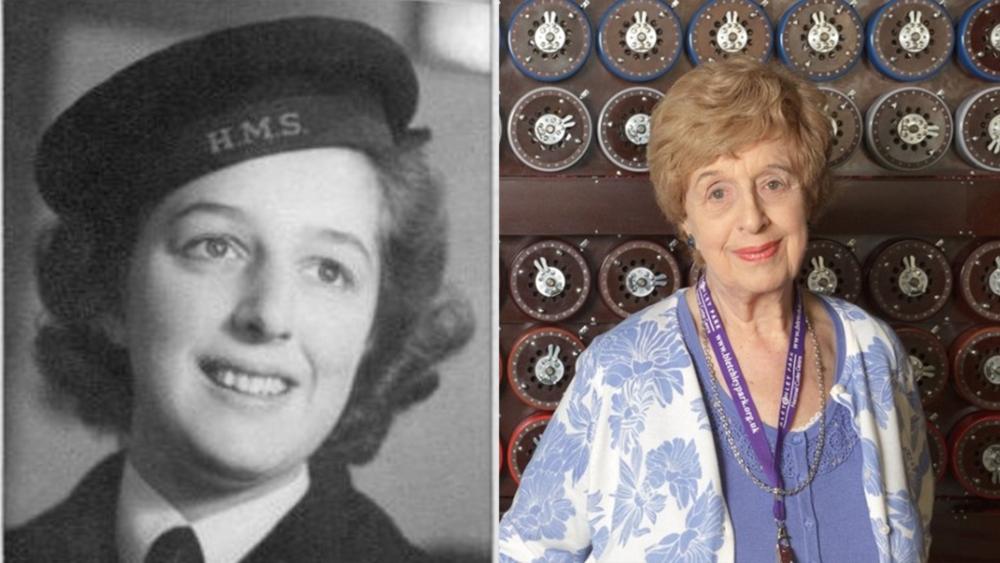
In what had become by 1942 a codebreaking factory, each young woman was assigned a specific task, beyond which they had no clue of the greater game plan. The ‘enwised’ did not share their knowledge in an organisation where everyone was sworn to secrecy. Ruth was told that ‘whatever we are doing, it is so secret that if you say anything you have to go to prison "at least". I didn’t know what at least meant, I thought what could be worse – chop off your head, hang you or deport you?’
In Ruth’s case work began in Eastcote, one of two north London outstations, home to Britain’s 211 Bombes, which claimed the attention of 1,676 Wrens. By 1944 this black gold of Britain’s code-breaking mission was more than ready for the Allies’ push across Europe. Expectant Bombes throbbed with around a hundred rotating drums, twelve miles of wire and one million soldered connections apiece. Every set of three coloured drums represented the rotors of the Enigma machine and each Bombe was capable of driving through all 17,576 possible rotor positions in approximately 30 minutes. Negotiating miles of snaking cable, the Wrens on duty plugged the machines up at the back and prayed for a positive ‘stop’ that would reveal the setting of the Enigma key in question.
After D-Day when the park was at its zenith, these Wren-Bombe teams helped harvest more than 18,000 Enigma message daily, Ultra intelligence that gave the Allies advanced warning of German military movements. Small wonder Ruth holds up Alan Turing as her hero - she was part of the team that helped convert his genius into life-saving information.
The symbolism of her war work endured. Post-war Ruth opened a laundrette in London’s Temple Fortune. ‘There was me sitting watching the drums go around and around, twelve in a row, just as I had watched the Bombe drums go around and around in the war.’
Like the rest of us, Ruth’s knowledge concerning Britain’s oft-vaunted Bletchley Park and her small part in its secret nexus came from much later, retrospective learning. ‘The security blanket was lifted in the seventies, that was when I filled myself up with knowledge about Turing’s Bombe.’
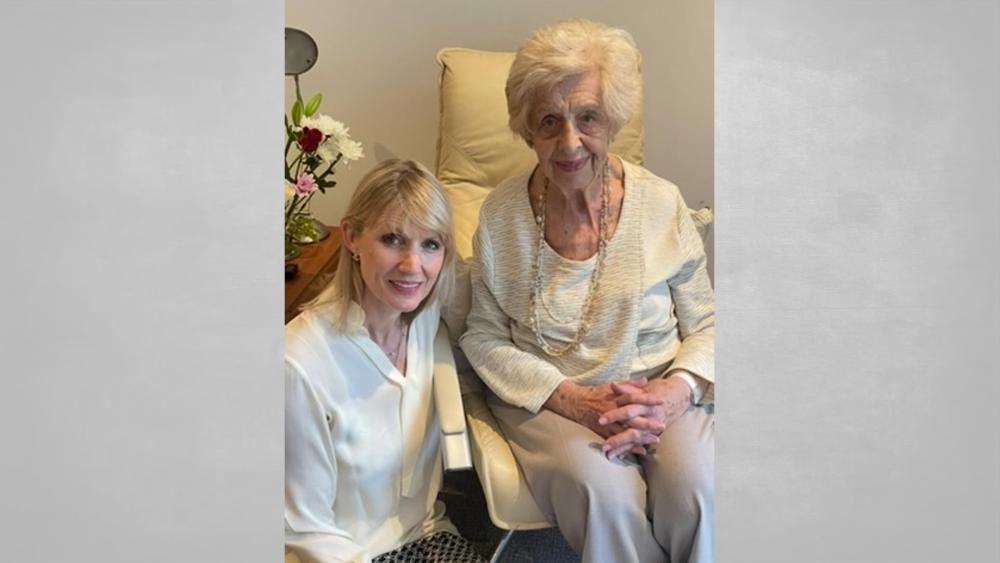
By the 1990s Ruth was a vital cog in a commemorative venture initiated by Bletchley Park Trust, travelling from her north London home to show curious onlookers in Buckinghamshire how she once worked night and day plugging up giant black Bombe machines. It is no surprise, therefore, that Ruth selected a statue of Alan Turing as her all-important war memorial.
The cryptologist sits in Manchester's Sackville Gardens, flanked on one side by the university buildings in which he once worked and Canal Street on the other – home to the city's gay village. For Ruth, who was born in nearby in Salford, this is the most honest monument to Turing’s life. ‘The thing is our generation experienced a watershed. We’ve been up the mountain and down the mountain. In that time the world I knew has changed into another world.’
Ruth is alluding not just to Turing’s life but also his death. Her sizeable ancient brain is trying to make sense of the country she and Turing fought for, both then and now. It is the same country that arrested Alan Turing for homosexuality in 1952, resulting in a conviction which ultimately led to his suicide.
I travelled north to sit beside him, send him Ruth’s good wishes and take a photograph of the apple that came to symbolise his death on my Apple phone. In memory of Alan Turing, a man who saved countless lives with his genius, who fought tirelessly for the freedom of others, but discovered at war’s end he was not free.
And in memory of my dear friend and Bletchley Park veteran Ruth Bourne who died aged 99 in December last year. I wish that she had been alive to watch Sky HISTORY’s epic 20-episode World War II with Tom Hanks series. I shared news of its progress with her, and sought advice for my small part in it.
RIP Ruth and thank you for all your service.
Tessa Dunlop is the author of Lest We Forget, 100 stories of Loss, Love and Heroism, available on Kindle for 99p during June 2026.


