

The murder victims of Bible John
The three young victims of Bible John are often overlooked. Read on to find out about how the victims faced misogyny even after death.
Image: A 1969 police composite sketch of Bible John | Fair Use / Background: Shutterstock.com
In 1960s Glasgow, an unknown killer stalked the streets, taking the lives of three young women. The killer was never discovered, but he was given a very specific moniker: Bible John.
This nickname came about after the murder of his third victim, Helen Puttock. Helen’s sister Jeannie shared a taxi with Helen and the killer, and she recalled him quoting Bible verses, which is how the name came about. Bible John was never brought to justice, but Glasgow and the world still remember the victims.The case is one of the shocking stories featured in a new Sky HISTORY series, Britain's Murder Map, starting Tuesday, 7 April at 9pm.
Join us here at Sky HISTORY as we dive deeper into one of the UK’s most prolific murders cases, and how the reaction to their deaths from the press was detrimental to the case as a whole.
The case of Bible John
Between 1968 and 1969 in Glasgow, Scotland, three women were murdered under similar circumstances. All three met the man who killed them while visiting the Barrowland Ballroom, a well-known dance hall in the area.
All three were killed in similar ways. They were beaten and strangled, but that’s not where the similarities end. They were also all menstruating at the time of their death. This led to the theory that the women were murdered as they turned down the sexual advances of the killer because of their periods.
The murders were never solved, despite the killings leading to a significant manhunt in Scotland. Serial killer Peter Tobin later became a suspect, but he was eventually ruled out, as the only forensic clue (a semen stain on one of the victims tights) did not match his DNA.
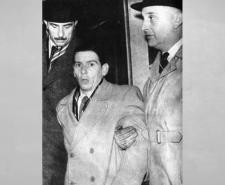
The victims of Bible John
Patricia Docker
Patricia Docker was 25 years old at the time of her death. She was an auxiliary nurse who had one child and was married, though she was estranged from her husband. Her body was found close to her home in an alley in the Battlefield district of Glasgow. Patricia was found naked and had been beaten in the head and face and strangled. While her clothes were never found, her handbag, lipstick and underwear were discovered in the River Cart.
Patricia’s post-mortem showed no signs of sexual assault but confirmed that strangulation was the cause of death. She was killed on 23rd February 1968 and was the first of Bible John’s victims.
Jemima MacDonald
31-year-old Jemima MacDonald was a mother of three who loved to dance and attended Barrowland Ballroom regularly. On 16th August 1969, Jemima visited the ballroom and at around 12:30am, she was spotted with a man walking towards her home. Her last sighting was close to a derelict tenement building on MacKeith Street standing with the same man.
Jemima’s sister Margaret O’Brien went looking for her the following morning. She found Jemima’s body in the aforementioned derelict building. Like Patricia, Jemima had been beaten badly around the face and strangled to death. She, too, had been menstruating, but unlike Patricia, she was fully clothed and only missing her stockings and shoes.

Helen Puttock
29-year-old mother of two, Helen Puttock, was visiting the Barrowland Ballroom with her sister Jeannie on the evening of 30th October 1969. Helen and Jeannie met two men whom they danced with at the ballroom, both of whom were called John.
Although the four of them left together, Jeannie’s dance partner got on a bus to go home. Helen, Jeannie and Helen’s dance partner got in a taxi and made the journey to Knightswood where Jeannie was dropped off at home, but Helen stayed in the taxi with the man.
The following morning, a dog walker found Helen’s body in the Scotstoun district. Helen was partially naked and had been beaten. She had also been raped before she was strangled. There were signs of a significant struggle between Helen and the killer. She had grass stains on her shoes and feet and there was evidence that she had attempted to climb up a railway embankment nearby. She had also been bitten deeply on the wrist.
Media and police scrutiny
The victims faced significant scrutiny and misogyny from the media and from the police. They were labelled as promiscuous. The menstruation element of the case also created public judgment against the victims for going out dancing while on their periods. Victim-blaming was rife, and this created an unjust and unfair perspective against the women whose lives were brutally taken from them.
The Bible John murders transformed the dancing social scene of Glasgow forever, with many women becoming fearful to go out alone. The negative press received by the victims also created a stigma of sorts, pressuring women to abide by the homebody stereotype.
Beneath the lingering misogyny and victim shaming, we can see the murders for what they were. Vicious crimes that took the lives of three young women who were mothers, sisters and daughters. Bible John’s identity may remain a mystery, but the case itself will unfortunately be remembered for the media and the police force's shoddy handling of the victim's dignity.
If you want to stay up to date on a range of historical topics, be sure to subscribe to the Sky HISTORY newsletter. By doing so, you’ll get exclusive access to all the latest content, including articles, videos and more.


