
James Phipps: The boy who became immune
The infectious disease of smallpox ran rampant for centuries, killing millions – until an experiment on the eight-year-old James Phipps changed everything.
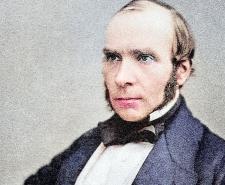
Image: British physician Edward Jenner first tested his smallpox vaccine on eight-year-old James Phipps | Public Domain
Humanity has been ravaged by various brutal pandemics – with the Black Death, Spanish influenza and COVID-19 just some notorious examples. The problem goes back to ancient times, as highlighted by Sky HISTORY’s Curse of the Ancients.
In fact, infectious disease could be especially lethal back then. Medical practitioners of the time were none the wiser about what would now be considered basic principles of immunology. So, how was the literal lifesaver of vaccination finally discovered?
We can thank not only the 18th-century British physician Edward Jenner but also his most important test subject, an eight-year-old boy called James Phipps. The latter received an experimental vaccine that would teach how to effectively guard against infectious illness, as Sky HISTORY was fascinated to learn.
The centuries-long scourge of smallpox
Smallpox has been declared eradicated since 1980. However, for centuries before that milestone, the illness could have horrific effects on those who caught it. Classic symptoms included fever and vomiting, while fluid-filled blisters would also form on the skin.
Smallpox survival rates could vary widely depending on existing immunity to the disease and whether it was the ‘variola major’ or milder ‘variola minor’ variant. Generally, though, as many as 30% of sufferers would lose their lives.
Even survivors were left with unsightly pockmarks after the blisters scabbed over and fell off. Such signs of smallpox have been found on Ancient Egyptian mummies, suggesting that the virus was even circulating millennia ago.
Attempts to combat smallpox
Many historical attempts to treat smallpox were irrational or foolhardy by modern standards. These ineffective measures included subjecting patients to intense temperatures or surrounding them with the colour red.
Some progress was finally made in the early 18th century when the practice of ‘variolation’ caught on. This involved inserting just a small amount of smallpox into the patient to generate an immune response. However, this approach could still cause major health issues.
Was there a safer alternative? Jenner suspected so. According to country lore, milkmaids became immune to smallpox after catching cowpox from cows they milked. Cowpox produced similar symptoms to smallpox, but much milder.
This gave Jenner the idea of scratching cowpox pus into patients. This would theoretically give them smallpox immunity without bringing about as many horrid side effects as smallpox variolation. Jenner just needed someone to test on.
James Phipps’ role in a pioneering study
James Phipps was born in the Gloucestershire parish of Berkeley in 1788. At the age of four, he was baptised in the local St Mary’s parish church. Phipps was the son of a labourer who, though poor and without land to call his own, worked as Jenner’s gardener.
In May 1796, Jenner opted to carry out a unique experiment on Phipps. A milkmaid called Sarah Nelmes had recently contracted cowpox, with vesicles on her hand to show for it. Jenner took some fluid from these vesicles and transferred it to Phipps through cuts made in the boy’s arm.

According to Jenner, Phipps soon ‘became a little chilly, lost his appetite, and had a slight headache’, but quickly recovered. After a few weeks, Jenner inoculated Phipps with smallpox – with no adverse health effects. It was a real eureka moment for Jenner.
In the modern day, ethical questions have been raised about these experiments. As their successful results were not easily foreseeable, Jenner was essentially gambling with a child’s health. It is also unclear whether Phipps gave full informed consent, as would be required for a similar study today.
The legacy of James Phipps
Jenner had created what came to be known as the first smallpox vaccine. He went to great lengths to publicise his tests on Phipps and their findings in a bid to attract mainstream support for vaccination.
Many more people still had to successfully undergo vaccination – and thus further prove its safety – before the public began to wholeheartedly embrace it. However, were it not for that early breakthrough with Phipps, the later vaccination tests – and the positive publicity surrounding them – may never have happened.
As for Phipps himself, he grew up to become a loyal long-term friend of Jenner. After Phipps married and had children, Jenner offered him a house to lease for free. In the wake of the physician’s death in 1823, Phipps attended his funeral.
Phipps himself left a monumental legacy upon passing away in 1853, with vaccination having since hampered the spread of various diseases – including polio and COVID-19.
By subscribing to the Sky HISTORY newsletter, you can be notified of exciting new content about humanity’s pandemic past.


