

Sir David Attenborough at 100: The life of a national treasure
Explore the life of one of the UK’s most treasured broadcasters. Delve into a timeline of the life of Sir David Attenborough – a national treasure.
Sir David Attenborough attends the National Audubon Society Annual Gala in New York City | Image: lev radin / Shutterstock.com
The word ‘legend’ is thrown about too often and too whimsically these days, diluting the potency and impact of the term. If we could restore the word to its former glory, then very few people would earn the right to be classified as a true legend. Sir David Attenborough is one of those select few who not only garners legendary status but also adorns the lofty heights of ‘national treasure’ and ‘cultural icon’.
For nearly 70 years, Attenborough has brought the wonders of the natural world to our homes via television, radio and, more recently, social media. His unique voice, described as a ‘hushed, reverential whisper, full of barely contained excitement,’ has introduced millions across the world to the wide, diverse and wonderful variety of flora and fauna our planet has to offer. In no simpler terms, Attenborough is the Godfather of natural history.
Ahead of Sir David’s 100th birthday on 8th May 2026, Sky HISTORY takes a look back at his remarkable life. What follows is not just a career, but a timeline of how one person steadily changed the way we see the planet.
The early years (1920s-1930s)
David Frederick Attenborough was born on 8th May 1926 in Isleworth, west London, but spent much of his childhood in Leicester, where his father, Frederick Attenborough, was principal of University College. His upbringing was shaped by both academic influence and quiet curiosity, with the university campus becoming an extended playground he could explore.
His mother, Mary Attenborough, played an equally significant role in fostering a warm and supportive home environment. The family took in two Jewish refugee girls during the Second World War through the Kindertransport programme, an experience that exposed Attenborough early on to global events and human resilience in a very personal way.
David was the middle of three brothers, each of whom would go on to achieve distinction in vastly different fields. His older brother, Richard Attenborough, became an acclaimed actor and filmmaker, while his younger brother, John Attenborough, built a career in business. Despite their different paths, there was a shared sense of curiosity and ambition that ran through the family.
As for Attenborough’s love of nature? Well, this stemmed from an early fascination for fossils, animals and the stories hidden within the natural world during early childhood.
A fascination with fossils (1940s)
By the early 1940s, David Attenborough’s childhood interest in the natural world had begun to take a more defined shape. After attending Wyggeston Grammar School in Leicester, he went on to study Natural Sciences at the University of Cambridge, graduating from Clare College in 1947. His studies focused on geology and zoology, giving him a scientific grounding that would later underpin his work as a broadcaster.
His time at Cambridge was interrupted by the Second World War, a period that inevitably shaped his early adult life. Like many of his generation, Attenborough was called to national service, serving in the Royal Navy in North Wales and the Firth of Forth. While not directly connected to his later career, this experience exposed him to a wider world beyond academia and instilled a sense of discipline and perspective.
He spent the next two years stationed in North Wales.

A move into broadcasting (1950s)
In 1950, Attenborough married Jane Elizabeth Ebsworth Oriel. The pair would remain together for the next 47 years before Jane passed away in 1997. The couple had two children, Robert and Susan.
Attenborough’s time at the BBC began in 1952 when he joined the broadcasting giant as a trainee. It wasn’t long before he became a producer, demonstrating a tenacious desire to take television shows to the next level.
His ground-breaking show Zoo Quest (1954) combined live studio presentation with actual wildlife footage shot on location, something that had never been done before. For the first time, people’s living rooms were filled with the wonders of the natural world, and the show’s success demonstrated to the execs that wildlife shows could attract large audiences. It was also Attenborough’s first stint in front of the camera.
The new Controller of BBC2 (1960s)
In 1965, Attenborough accepted an offer from the BBC to become Controller of its new TV channel BBC2. By establishing a portfolio of diverse programmes ranging from music and the arts to experimental comedy and travel, Attenborough defined the identity of the fledgling channel for decades to come. Some of his most famous commissions include Match of the Day, Call My Bluff and the era-defining comedic juggernaut Monty Python’s Flying Circus.
During this time, Attenborough also played a key role in introducing colour television to the UK and commissioning groundbreaking programming. Although this period pulled him away from filming, it gave him a broader understanding of how television could educate and engage.
Even then, however, there was a sense that his real work lay elsewhere. Not behind a desk, but out in the field.

A return to storytelling (1970s)
In the 1970s, Attenborough made a decisive shift back to programme-making, leaving his executive role to focus on storytelling. This decision would define the rest of his career.
Immersing himself in the environments he filmed, Attenborough pioneered new filming techniques and documentary styles, pushing the boundaries of natural history programming to deliver stunningly immersive wildlife shows. Life on Earth (1979) was a prime example – a televisual feast that became the benchmark of quality for wildlife shows. It was watched by upwards of 500 million people worldwide and became a huge commercial success for the BBC.
This was the moment Attenborough became more than a broadcaster; he became a guide to understanding life itself.
Expanding the ‘Life’ series (1980s)
Following the success of Life on Earth, the 1980s saw Attenborough build on that foundation with The Living Planet in 1984, which explored how species adapt to their environments.
The series combined scientific depth with a calm, accessible style of narration that became his signature. It also reinforced his ability to connect complex ideas with everyday audiences.
By the end of the decade, Attenborough had helped redefine what a documentary could be.
Pushing boundaries (1990s)
The 1990s marked a period of experimentation and expansion. Attenborough continued the Life series with The Trials of Life and later projects that explored more specific areas of the natural world.
Series like Life in the Freezer and The Private Life of Plants used new filming techniques, including time-lapse photography, to reveal behaviours never seen before.
Even at a stage when many would slow down, Attenborough was still pushing the boundaries of what television could be and what it could show viewers.
Technology meets nature (2000s)
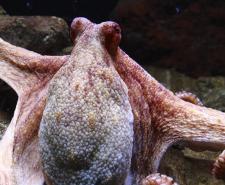
By the early 2000s, advances in technology opened new possibilities, and Attenborough embraced them fully. Series such as The Life of Mammals and Life in the Undergrowth used infrared cameras and macro photography to capture previously unseen detail.
This decade also saw him complete a long-running ambition. Attenborough decided to document all major groups of life on Earth through an interconnected series.
A voice for the planet (2010s)
In the 2010s, Attenborough’s work took on a more urgent tone. While continuing to produce visually stunning documentaries, he increasingly focused on environmental issues, particularly climate change and biodiversity loss.
Programmes like Planet Earth II and Blue Planet II reached global audiences and helped spark widespread conversations about conservation. His narration remained calm and measured, but the message became clearer: the natural world was under threat.
This decade transformed Attenborough from storyteller to advocate, without losing the qualities that made his work so widely trusted.
Reflection and legacy (2020 – present)
In recent years, Attenborough has turned toward reflection, using his platform to look back on both his career and the changes he has witnessed. His documentary A Life on Our Planet serves as both a personal account and a warning about the future of the Earth.
Even into his late nineties, he has continued to produce new work, demonstrating a commitment that has remained unchanged for decades.
Rather than slowing down, this period feels like summing up a lifetime of observation distilled into a message about responsibility and hope.

Recognition and accolades
For his work, Attenborough has been presented with numerous accolades, including a Knighthood, a Knight Grand Cross of the Order of St Michael and St George, and a Champion of the Earth award. Over 20 creatures, both living and extinct, have also been named in his honour.
Attenborough released Wild London in 2026, a short documentary about London’s diverse wildlife. His 100th birthday is set to be celebrated with a variety of events, including a special concert from the Royal Albert Hall.
Want to receive more historical insight like this? Subscribe to the Sky HISTORY newsletter today. Every week, you’ll get articles, clips and news about upcoming series delivered straight to your inbox.


