
How an unsolved murder led to the Notting Hill Carnival
Uncover the Notting Hill Carnival’s dark history by discovering the story of Kelso Cochrane, the victim of a racially-motivated murder in 1959.
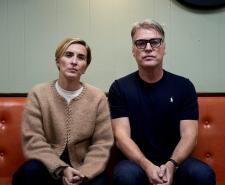
Image: Britain's Murder Map with Vicky McClure and Jonny Owen
It’s the biggest annual carnival in Europe, attracting around two million revellers from far and wide to London every August. Yet for all the parades, music and food, you might not suspect that the history of the Notting Hill Carnival is far darker.
The shocking truth is that the tradition was inspired by a brutal, racially-motivated murder that remains unsolved over 65 years later.
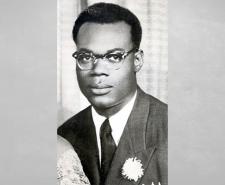
On the 17th May 1959, Antiguan carpenter Kelso Cochrane was making the short journey home on foot from Paddington General Hospital. But he’d never make it – he was ambushed by two men and stabbed to death at the age of 32.
The news of his murder and the subsequent media coverage appalled locals. But as Vicky McClure and Jonny Owen discover in episode four of Britain’s Murder Map, it led to a significant change in the area. Sky HISTORY takes a closer look at the story.
A febrile atmosphere
Today, London is known as being one of the most welcoming and multicultural cities anywhere in the world. Yet in the 1950s, the picture was very different. While the Windrush generation had begun arriving from the Caribbean, not everyone was accepting of their new neighbours.
Kelso Cochrane was just one of many seeking a new life in the country. Described as a young, vibrant and ambitious young man, he’d travelled to the UK with the dream of saving enough money to go to law school. But after arriving in the country in 1954, he’d soon discover the febrile atmosphere that existed around the Notting Hill area where he’d made his home.
The extent of the problem had been evident only a year before Kelso’s murder. In August 1958, race riots exploded in the area after a white Swedish woman by the name of Majbritt Morrison was assaulted in public by her Jamaican husband. The riots further fuelled discrimination, with many from the Windrush generation barred from pubs and dance halls and made to feel unwelcome.
As Colin Prescott, a sociologist who grew up in Notting Hill, explains in Britain’s Murder Map, for many Caribbeans the reception was a rude awakening. ‘They come as people who think they're citizens of the British Empire and therefore of Great Britain, and are in the main, very surprised about the unwelcome that they experience.’
The night of Kelso’s murder
On the night of 19th May, Cochrane was returning home from Paddington General Hospital. A carpenter by trade, he’d sustained an injury at work – he’d broken his thumb and his arm was in plaster. Yet not long after leaving the hospital, he would be the victim of an unprovoked attack by two men and receive a fatal stab wound, dying in the street.
Initial newspaper reports suggested that the murder was racially motivated. Yet within days, there was a clear change in tone. Cochrane was described as ‘living a double life’, with one paper brazenly reporting that ‘the knife that killed him was probably his own. He liked to carry one.'
For Vicky and Jonny, reading the reports was a particularly shocking moment in their investigation of the case.
‘In the space of a week, we've got three huge articles in three massive papers that have gone from one theory to another theory to a character assassination,’ Vicky says. Jonny agrees: ‘It's a continuation of just trying to change the narrative.’
Two men – Patrick ‘Pat’ Digby and John William Breagan – were suspected of murdering Cochrane. Both had criminal records and had attended a party nearby on the night of the murder. Yet despite being interviewed by police, neither was ever charged.
Crucially, Breagan had previously served jail time for attacking three black men in one day, and was reported to have threatened to kill after his release. ‘If I do time for this, when I come out I’ll kill the first [black person] I see. I mean that, too.’
Cochrane’s murder took place only 10 days after Breagan’s release.
In Britain’s Murder Map, Vicky speaks to the stepdaughter of Pat Digby, who confirms that he confessed to the killing. ‘He said “It's something you'll never be able to prove anyway.”’
Digby and Breagan died in 2007 and 2019 respectively.
How Kelso’s murder led to the Notting Hill Carnival
Rather than letting the murder further increase racial divisions in the area, the tragedy led to the community coming together. More than 1,200 people – of all backgrounds – lined the streets on the day of Kelso’s funeral.
And when fascist politician Oswald Mosley attempted to capitalise on Cochrane’s death, he was roundly rejected. Mosley ran as a candidate for Kensington North in the 1959 general election, campaigning on an anti-immigration platform that proposed forced repatriation. Yet he’d finish a distant fourth, securing less than 3,000 votes.
The change in mood was further cemented with the return of a carnival in the year following Kelso’s murder. Claudia Jones – a Trinidadian-born activist, journalist, and community organiser – had already staged an indoor Caribbean carnival in January 1959. The event was designed to celebrate Caribbean culture and push back against the racism the community faced since the 1958 race riots.
In response to the brutal murder, the indoor carnival returned in 1960 and would eventually move outdoors, becoming what is now the Notting Hill Carnival.
The connection is explored in more detail in Britain’s Murder Map, where Vicky and Jonny meet Norman Jay, a British DJ who was a key part of the carnival for over 30 years.
'If there was no Kelso, and obviously the riots here before, there would have been no carnival. The community putting that on was the catalyst,' Jonny summarises.
'Yeah, that was the catalyst,' Jay agrees. 'It's only now, in my more senior years, that I recognise the social importance of what I was doing at the time. You know, getting justice for those people and families is the priority. That's what carnival really celebrates now.'

An important moment in British post-war history
Kelso Cochrane never received justice. Through police failings, his suspected killers avoided trial and prosecution, and many of the files related to the case remain sealed to this day. Yet his name continues to live on and be celebrated by millions every year at the Notting Hill Carnival, an important and powerful legacy.
For Vicky, it’s a bittersweet ending – a case marked by both profound injustice and a story that refuses to be forgotten.
'It's not been an easy story to unpick. I've found it quite heartbreaking because it felt like it was so cold-blooded, and there was absolutely no rhyme or reason other than race,' she says in Britain’s Murder Map. 'Knowing Kelso Cochrane's name feels so important, not just to Notting Hill but to London and the world, given so many people come over for the carnival. Just to have an understanding of where it began.'
'This is such an important moment in British post-war history, you want to learn this in school,' Jonny concludes.
Learn more about Kelso’s story in episode four of Britain’s Murder Map, available now on Sky HISTORY. Want to receive more historical insight like this? Subscribe to the Sky HISTORY newsletter today. Every week, you’ll get articles, clips and news about upcoming series delivered straight to your inbox.


