
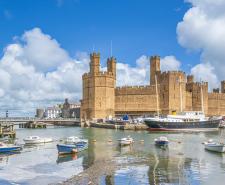
Great British Castle Rescue: 3 forgotten castles in the UK
Sky HISTORY’s Great British Castle Rescue follows efforts to repair the long-overlooked castles of Fyvie, Gwrych and Lowther. How did they fall into ruin?
Image: Rick Edwards takes an aerial and up-close view of some of the UK’s most awe-inspiring castles | Great British Castle Rescue
It’s easy to reel off a long list of well-known British castles – from Windsor Castle to Edinburgh Castle. Some castles across the country, though, have fallen into obscurity and ruin.
Three of those overlooked gems get long-overdue attention in the new Sky HISTORY series Great British Castle Rescue, starting Monday, 9 March at 9pm.
Here’s a close look at the respective histories of those castles – Fyvie in Scotland, Gwrych in Wales and Lowther in Cumbria.
1. Fyvie Castle: Charles I’s childhood home
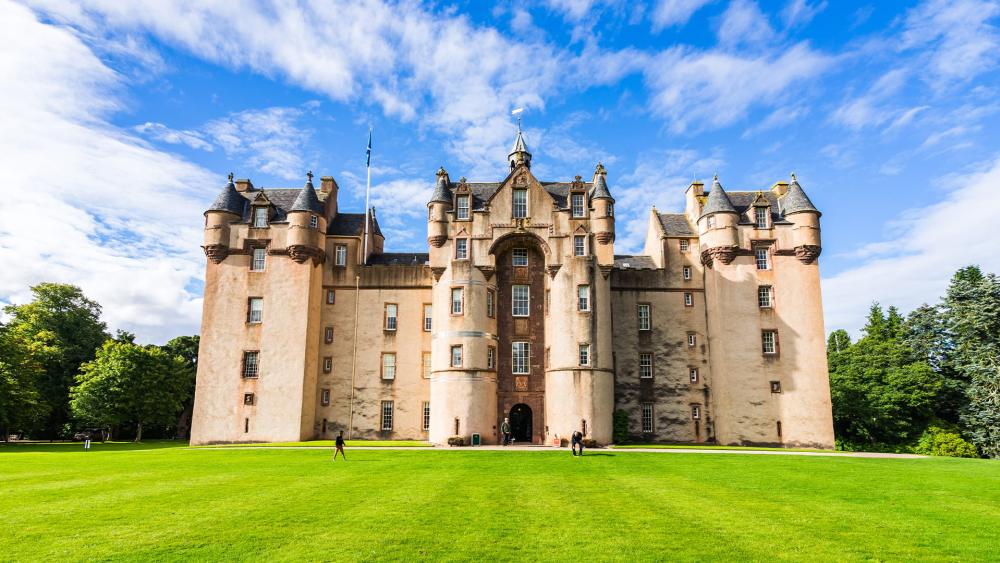
Image: Fyvie Castle| Francesco Bonino / Shutterstock.com
Fyvie Castle lies in the Scottish village of the same name. The history of this Aberdeenshire castle has been traced as far back as the early 13th century. William the Lion is thought to have been at Fyvie Castle around this time, while Robert Bruce later held an open-air court here.
Though Charles I spent some of his childhood at Fyvie Castle in the early 17th century, it was no longer royal-owned by this point. Over the centuries, Fyvie Castle passed through the hands of numerous prestigious families – including the Prestons, the Meldrums and the Setons.
The castle was eventually acquired by the National Trust for Scotland in 1984. Today, it is open to the public, who can visit to admire this fine example of Scottish baronial architecture. The plight to restore Fyvie Castle for future generations is highlighted in the series premiere of Great British Castle Rescue.
Is Fyvie Castle haunted?
Fyvie Castle is one of the most famous haunted castles in Britain. One famous resident ghost – 16th-century wife Lilias Drummond – has garnered the moniker of ‘the Green Lady’.
In the early 20th century, a human skeleton was found hidden behind a bedroom wall and subsequently buried elsewhere. Soon afterwards, the castle was struck by a series of spooky disturbances, which only came to an end after the bones were returned.
2. Gwrych Castle: The Georgians do Gothic
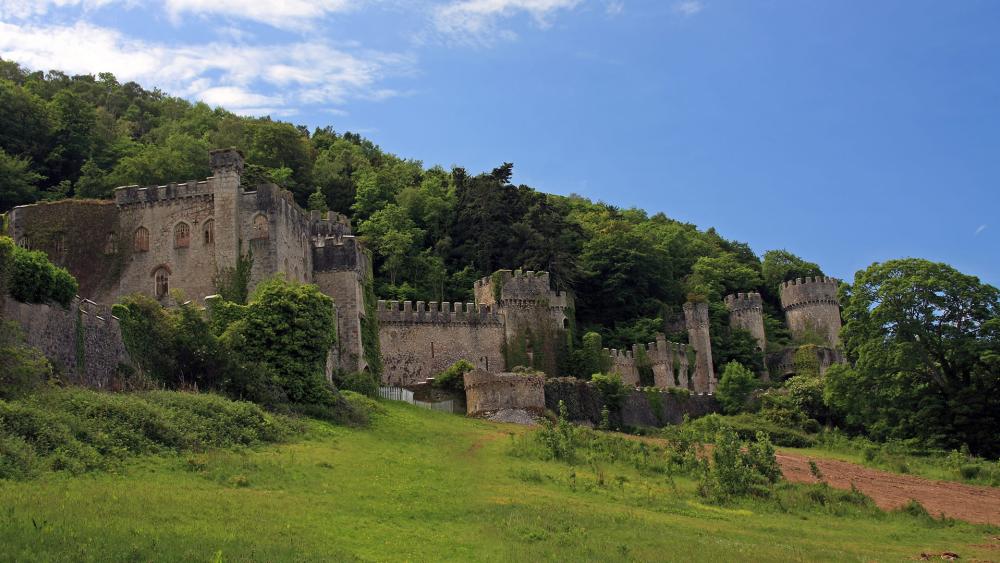
Image: Gwrych Castle | Shutterstock.com
This Grade I listed country house looks even older than it actually is – and not just because of its derelict state. Gwrych Castle was built in the 1810s to incorporate stylistic elements of medieval architecture.
It was all part of the Gothic Revival trend. Lloyd Hesketh Bamford-Hesketh kickstarted the building work near the north Welsh town of Abergele.
Queen Victoria reputedly stayed at the property – which also, just before World War II, welcomed Jewish children rescued from the threat of Nazi persecution. By the Noughties, however, the castle had quite literally fallen apart – leaving a young local history buff, Mark Baker, determined to save it.

Gwrych Castle finds new fame on TV
Baker’s efforts to save Gwrych Castle led to the formation of the Gwrych Castle Preservation Trust, which continues to carry out restoration work.
In recent years, you’ve probably spotted the castle on quite a few TV shows, including the BBC’s The One Show and Great British Railway Journeys. Most famously, it was the filming location of ITV’s I’m a Celebrity… Get Me Out of Here! during the COVID-19 pandemic.
Now Gwrych Castle is returning to TV screens yet again, this time in the second episode of Great British Castle Rescue. In the show, we follow Baker as he looks at other castles for ideas about how to revitalise Gwrych.
3. Lowther Castle: Cumbria’s Regency gem
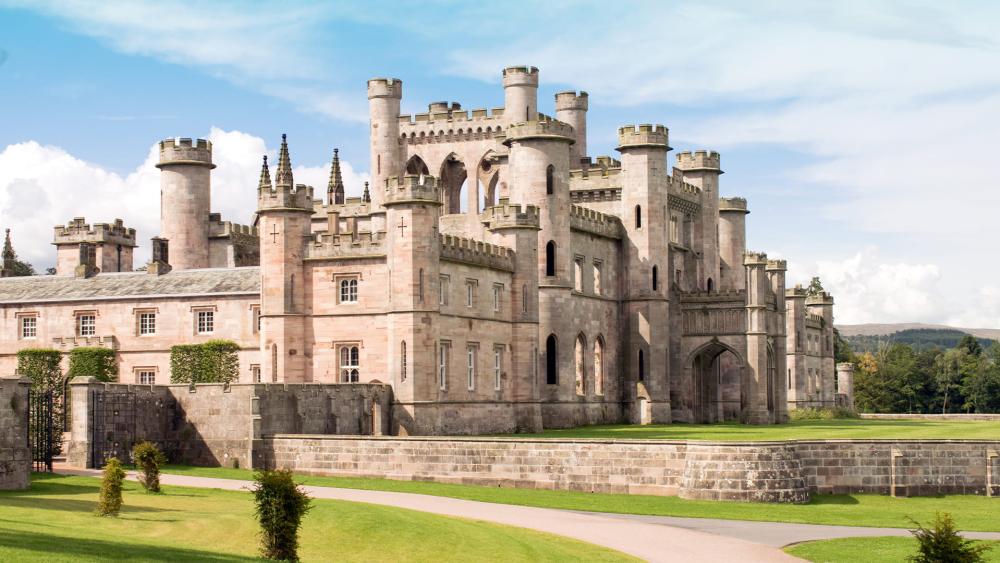
Image: Lowther Castle | Shutterstock.com
Here’s another Georgian country house built in a Gothic style, this time in the Cumbrian settlement of Lowther. Lowther Castle was originally assembled in the Regency period for William Lowther, 1st Earl of Lonsdale. The property was designed by Sir Robert Smirke, an architect also renowned for his work on the British Museum.
The finished building was handed down through generations of the Lowther family. However, in the 1930s, the 5th Earl of Lonsdale found himself too financially beleaguered to continue living in Lowther Castle. It was later occupied by the British Army during World War II.
How Lowther Castle is being rescued from ruin
By the 1950s, Lowther Castle belonged to the 7th Earl, much to his own reluctance. He saw the castle as an unnecessary extravagance – an attitude that led him to largely gut and demolish the structure. Reportedly, only the façade and outer walls were left standing.
Lowther Castle was still pretty much an empty shell before being restored and opened to the public in the 21st century. Nonetheless, it remains on an ‘at-risk’ register – a situation Jim Lowther, the 7th Earl’s son, is eager to change. In the third episode of Great British Castle Rescue, we see his ambitious plan for Lowther Castle.
To keep yourself updated on new TV content as it arrives, subscribe to the Sky HISTORY newsletter.


