
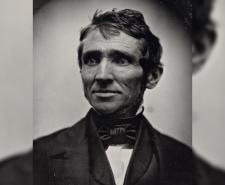
John Logie Baird: 100 years since the first TV demonstration
In his lab 100 years ago, inventor John Logie Baird delivered the first public demonstration of true television. What exactly did viewers see that day?
Image: John Logie Baird / Shutterstock.com
Here in the 21st century, television is such an intrinsic part of our lives that it’s hard to imagine what they would be like without it. However, up until about a century ago, the very concept of TV would have been seen as ridiculously overambitious.
That all started to change after Scottish inventor John Logie Baird publicly demonstrated the first proper television set in January 1926. Only a few dozen observers were in attendance, but what they saw was history in the making.
It was arguably the first big hint that the idea of television as we know it today was practically viable. Though it still took a few more decades for TV to become mainstream, Baird is today considered a major pioneer in the field.
It’s enough to make us want to travel back in time to see that demonstration at Baird’s London laboratory back in January 1926. What exactly happened on that pivotal day, and how did it lead to further groundbreaking developments in audiovisual technology? Sky HISTORY are beckoning you into the time machine…
Early breakthroughs in TV tech
The TV set shown off by Baird in January 1926 was something of a jigsaw, comprising various disparate (but surprisingly everyday) components. However, one especially significant piece of that jigsaw had already been invented decades earlier, when Queen Victoria was still on the British throne.
That piece was the ‘Nipkow disk’. Patented by German engineer Paul Nipkow in the 1880s, this disk dotted with perforated holes would be spun to capture an image. This image would then be transmitted electronically. Baird had the idea to include this device as part of a revolutionary TV set he branded as the ‘Televisor’.
Baird was born in August 1888 in the Scottish town of Helensburgh and moved to southwest England in his thirties. By 1925, he was running a London laboratory where he undertook experiments as he strove to perfect the recipe for his latest invention. (Baird has been credited with other inventions, including a glass razor, a thermal undersock and even a radar-like system allegedly used during World War II.)
Getting TV ready for prime time
Months before January 1926, more and more people were already seeing the impressive results of Baird’s handiwork for themselves. In early 1925, he turned up at Selfridges department store in London to showcase television’s ability to capture moving silhouette images.
Later that year, Baird’s Televisor transmitted a more detailed greyscale image – that of a ventriloquist dummy’s head. Could the device televise the image of a human just as well? Baird didn’t have to wait long to find out thanks to his guinea pig, 20-year-old office worker William Edward Taynton.

This all happened at the laboratory Baird ran in the attic at 22 Frith Street in London’s Soho district. Today, that address is occupied by the famous Bar Italia café. However, if you approach the building, you could quickly notice a blue plaque commemorating Baird’s most famous moment…
The world’s first public TV demonstration
At Selfridges, Baird had already shown some of televisual technology’s capabilities to members of the public. However, the first public demonstration of what we would call proper television images did not occur until 26th January 1926.
That’s when, in the same Soho laboratory mentioned above, Baird gathered dozens of Royal Institution members to show them the progress he had made since. A reporter from The Times was also there to see the spectacle.

In the newspaper later that week, the reporter recalled a doll’s head being used as a prop. ‘The image as transmitted was faint and often blurred,’ the report stated. All the same, ‘the visitors were shown recognisable reception of the movements of the dummy head and of a person speaking.’
How early TV continued to evolve
The Times writer noted: ‘It has yet to be seen to what extent further developments will carry Mr Baird’s system towards practical use.’ In the event, Baird’s mechanical approach to TV transmission did land him a deal with the BBC later in the decade.
In the late 1930s, the BBC abandoned the Baird system in favour of a fully electronic alternative developed by the Marconi-EMI company. However, long after his death on 14th June 1946, Baird is celebrated for confounding the skeptics – by proving that TV wasn’t a pipe dream.
While on the subject of TV, it’s easy to stay in the know about history programmes about to air on it. Get started by subscribing to the Sky HISTORY newsletter!


