
Sodomy and persecution in William III’s England
Historian Jack Beesley explores how sodomy rumours around William III helped fuel the public persecution of queer men in England.
The following is a guest article from historian and final-year PhD researcher Jack Beesley, known on TikTok as History's Hidden Chapters. His research examines how royal scandal and campaigns for moral reform in the 1690s changed the way English society understood and persecuted queer men.
Here, Jack explores how these developments made 'sodomy' a recognisable public and legal target, leading to the systematic persecution of ordinary queer men for the first time in English history.
On 7th November 1698, a sea captain named Edward Rigby was arrested at the George Tavern in Pall Mall. He had been discovered in a private room with another man, William Minton, 'in his arms'. Within weeks, Rigby was hauled before the Old Bailey, sentenced to a year’s imprisonment, three appearances in the pillory, and 'a Fine of 1000l. to the King.' That king was William III.
Rigby may well have felt the sting in paying this inordinate sum to a monarch who was himself accused of being a 'shameless Sodomitical Rascal'. In fact, the intensity of the 'sodomy' accusations against William was one reason Rigby’s case mattered so much. Together, royal rumour and Rigby’s prosecution gave sodomy a new public visibility, helping spark the persecution of everyday queer men in England. But what led to this moment?
10 years earlier, on 5th November 1688, William of Orange landed at Torbay after being invited by seven Protestant nobles to depose his Catholic father-in-law, James II. Within months, James had fled to France, and William was crowned alongside his wife, Mary II, James’s daughter. History would remember this as the Glorious Revolution.
But William’s arrival came with a problem. In around 1686 or 1687, Gilbert Burnet, one of William’s supporters, listed the obstacles he might face as king. Among them was one 'particular' that was 'too tender to be put in writing'. The ambiguity hints at Burnet’s meaning.
Denounced by contemporaries as 'the Unnatural Lust of Men towards Men', sodomy had long been known as 'the unmentionable sin'. In England, this silence helped make prosecutions exceedingly rare, with a near-total absence of cases in medieval England. Church and secular courts had the power to punish 'sodomites' severely, even by death, but unlike parts of Italy or the Netherlands, England rarely turned that power into formal proceedings.
However, that silence began to shift during the Protestant Reformation. Sodomy became a weapon in England’s war of words against Catholicism. In John Bale’s anti-Catholic play The Three Laws of Nature, Moses, and Christ, a character called 'Sodomismus' boasts of the pope’s same-sex desires. In the English Protestant imagination, sodomy was foreign, Catholic, and un-English. It was something other people did, somewhere else, and so it still went largely unpunished throughout the 16th and 17th centuries.
This changed during the reign of William III. On the day of his coronation, a ballad appeared claiming that he was 'not qualified for his wife', but that 'buggering of Benting doth please to the life'. 'Benting' was Hans Willem Bentinck, William’s long-standing Dutch favourite, whom he made Earl of Portland within weeks of becoming king.
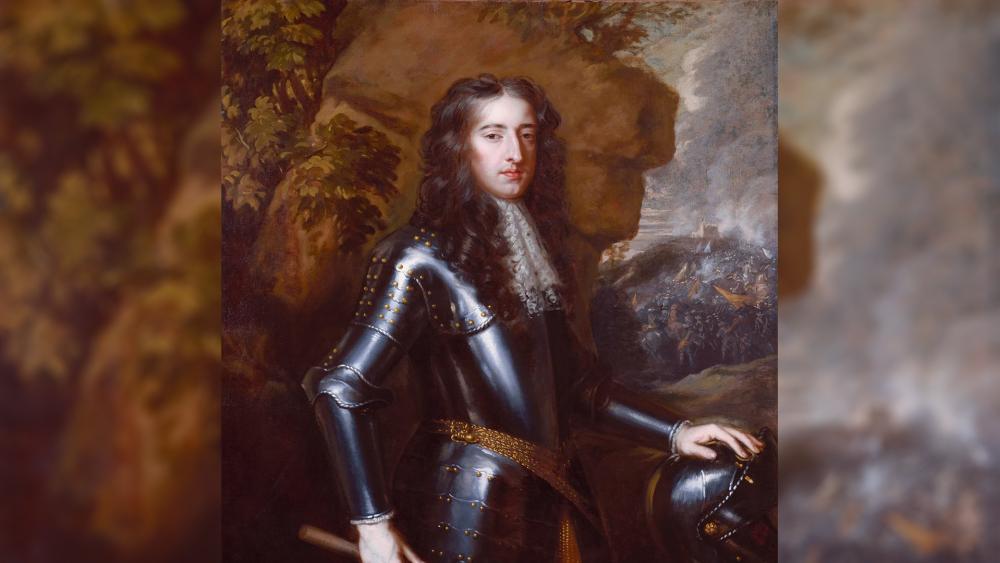
Dozens more poems, ballads, and satires followed. William was, in one hostile phrase, 'downright charge[d]…with Sodomy'. These attacks were meant to wound him politically, but they also did something larger. They dragged sodomy into public conversation and attached it not to a distant Catholic enemy, but to England’s own Protestant king.
One poem, The Ladies Complaint, captured the shock of this reversal: 'Ah who could have thought that a Low-Country Stallion / And a Protestant Prince should prove an Italian.' Italy, the seat of Catholicism, was described in post-Reformation England as the 'Mother and Nurse of sodomy.' William was supposed to have saved Protestant England from Catholic tyranny. Instead, his enemies suggested that he had brought foreign corruption with him. Another poem lamented that 'old Popery' had been turned out, only to be replaced by 'Almighty Sodomy'.
The fear was not only that the king might be guilty, but that his example might spread. Seventeenth-century people often imagined sin as something that flowed downwards from the top of society. If the monarch was corrupt, the nation itself could become corrupted. One satire, Jenny Cromwell’s Complaint Against Sodomy, claimed that England 'had no relish of the fair fac’d Boys' until William’s reign 'Turn’d all things Arsy Versy in the nation'. Men, it claimed, now imitated the king: 'Thinking they must be Mimicks to the Crown, / They to each other put their breeches down.'
By the end of the 1690s, this fear had become even more explicit. Two satires from 1699, The Women’s Complaint to Venus and Venus’s Reply, imagined a country where women had been abandoned because men now 'vent on each other their passion'. England had become 'overrun By sparks of the Bum, And Peers of the Realm of Gomorrah.'
The joke was crude, but the anxiety was serious. These poems imagined sodomy not as an isolated sin committed in secret, but as a corruption spreading from the royal court to the street. One line claimed that some women 'have not been lain with these ten years', a pointed reference to the length of William’s reign. The problem was no longer just rumour around the king; it had become a story about national decline.
And then came Edward Rigby. The final appeal in The Women’s Complaint to Venus asked the goddess to 'Make Rigby recant, / And the Soldiers henceforth do their Duty.' In a few lines, the poem linked the rumours around William to the prosecution of an ordinary sea captain. Royal scandal and street-level persecution had met.
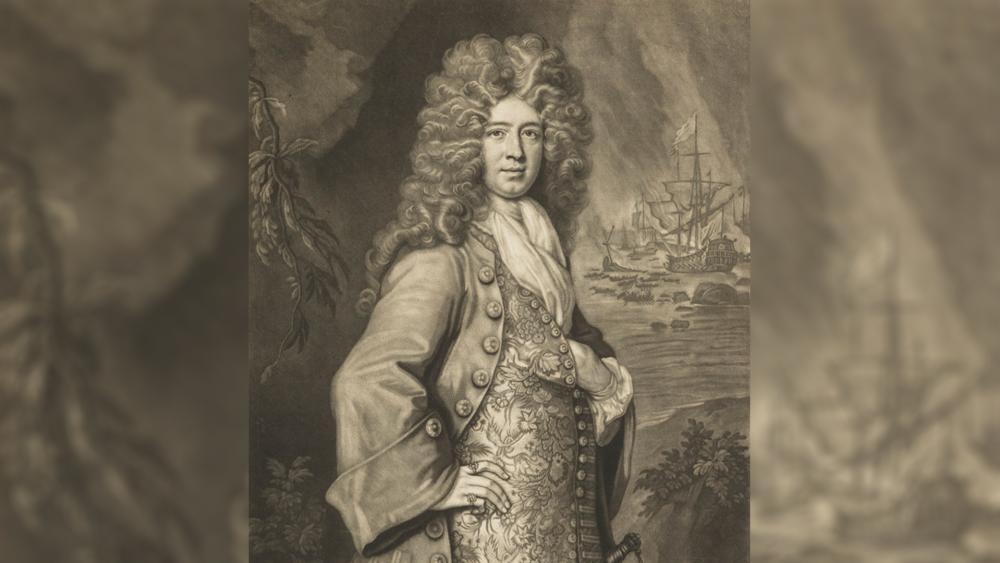
That street-level punishment was new, and it owed much to the 'Societies for the Reformation of Manners', a network of moral reformers determined to stamp out vice. Their campaign emerged from the religious energy that followed the Glorious Revolution. To them, William’s victory was a sign of God’s favour and a chance to restore England’s morality and Protestant strength.
William himself encouraged this vision. In 1690, he promised Bishop Compton of London that he would 'endeavour a general reformation of the lives and manners of all our subjects'. For William’s supporters, the king and queen stood for piety, Protestant liberty, national deliverance, and a clean break from the corruption of the Stuart past. But the sodomy accusations threatened to turn that image inside out.
This is why the societies’ early campaign against sodomy, beginning with Rigby, was crucial. For reformers loyal to William, prosecuting men like Rigby helped solve a political problem. It moved the scandal of sodomy away from the king and onto ordinary offenders who could be exposed, punished, and made examples of in public. In doing so, the campaign aimed to preserve the image of a monarchy, and a nation, standing above sexual vice.
In 1702, the societies published The Sodomites Shame and Doom, a pamphlet and sermon by an anonymous minister of the Church of England. It acknowledged England’s former silence on the subject, noting that this 'hateful Sin is seldom reproved in Sermons'. That silence would no longer do. The minister threatened to reveal the sodomites 'places of abode' and 'scandalous haunts' if they did not reform. Soon, this is exactly what happened.
In 1704, the twelfth edition of the Account of the Progress of the Reformation of Manners, reported that 'since the trial and punishment of the sea captain' (Rigby) three further persons had been found guilty of sodomy and executed. By 1707, this moral crusade had become what can only be described as a targeted purge of queer men in London. At least forty men were arrested and several of them took their own lives while awaiting trial.
By the end of William’s reign in 1702, sodomy had moved from 'unmentionable sin', to royal scandal, to public emergency for the first time in English history. The rumours around the king did not bring William down. Instead, they helped create a campaign that fell on men like Rigby, men who could be trapped, exposed, and punished. That persecution would last for centuries. In 1835, James Pratt and John Smith became the last men hanged for sodomy in England. Rigby survived the gallows, but the world his prosecution helped create did not spare others.


