
The 5 Victoria Crosses awarded at the Battle of Arnhem
Kyle Jackson of Adventure Through History tells the story of the five men awarded the Victoria Cross for their bravery at the Battle of Arnhem.
Kyle Jackson is the creator and presenter behind Adventure Through History, a rapidly growing history platform dedicated to bringing the past to life through immersive storytelling, on location exploration and engaging historical content. In the following guest article, Kyle honours five men who fought at the Battle of Arnhem in 1944, whose heroic acts of bravery earned them the highest honour in the British Armed Forces, the Victoria Cross.
"Greater love hath no man than this, that a man lay down his life for his friends."
The Victoria Cross is the highest medal awarded for gallantry in the British Military. Regardless of rank, from Private to General, any member of the armed forces can receive one. It is awarded only for the most exceptional acts of bravery, courage and devotion to duty in the presence of the enemy. Its origin began as its name suggests, in the Victorian era.
During the Second World War, more than 8.5 million men served Britain and the Commonwealth, yet only 182 Victoria Crosses were awarded throughout the entire conflict. To earn such recognition in a global war required an act of courage beyond imagination. For five men in September 1944, that moment came during one of the most controversial battles of WWII. The Battle of Arnhem.
Allied airborne troops were to capture a series of bridges in the Netherlands, allowing ground forces to advance into Germany. British paratroopers of the 1st Airborne Division landed near Arnhem and were tasked with seizing the vital bridge crossing the Lower Rhine.
A small force secured the northern end of the bridge and held out for four days against overwhelming and relentless German attacks. Resistance was much heavier than expected and delays with reinforcements left the airborne troops surrounded. They were ultimately captured.
Those who failed to reach the bridge established defensive positions around the village of Oosterbeek. After nine days of fierce close quarters fighting, the survivors were forced to withdraw and evacuate across the river. Around 1,800 troops were killed and over 6,000 were taken prisoner. Out of a force of approximately 10,600 men that dropped into Arnhem, 80% of them became casualties. It was a disaster for the British.
Although officially called ‘Operation Market Garden’, this battle would become known by many as 'A Bridge Too Far'. During the entire Normandy Campaign, which lasted almost three months, four Victoria Crosses were awarded. At Arnhem, in less than a week, there would be five.
Only one recipient would survive.
Lieutenant John Grayburn
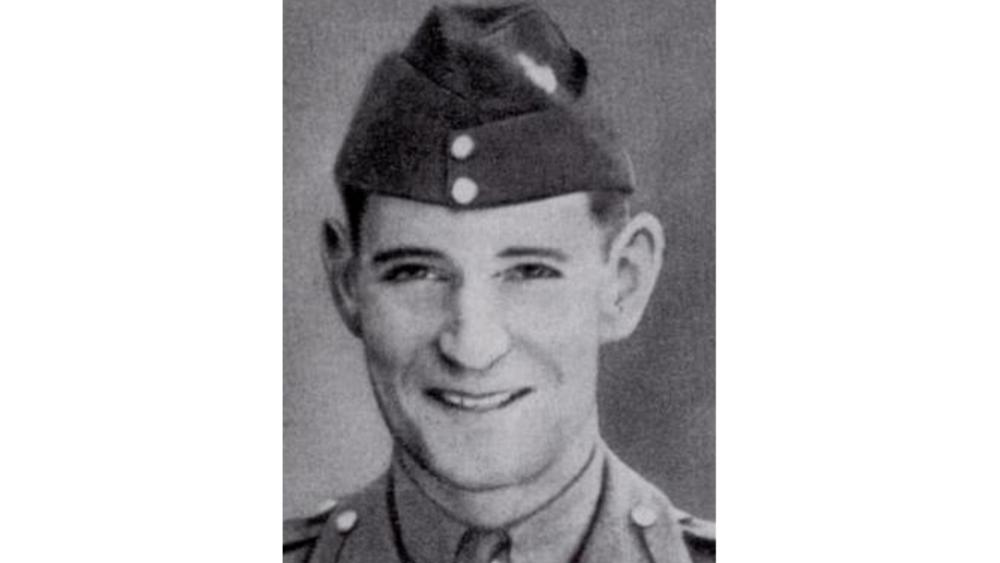
Lieutenant John Grayburn reached Arnhem Bridge just after nightfall on the first day of the battle. He was leading a company of men to take control of the northern sector. In the darkness and shadows, they approached the road ramp leading to their objective. Immediately the German defenders opened fire on them.
The airborne troops took many casualties, but Lieutenant Grayburn charged on. He was hit in the shoulder, but this did not deter him. Despite being wounded, he rallied his men to advance on the concealed German positions.
For many of the British troops, this was their first taste of combat. The Germans they were facing were battle hardened veterans of Normandy and the Eastern Front. They would not give up without a fight. Realising this, Grayburn ordered a retreat. He was the last soldier to leave the bridge. They occupied the houses around the bridge and, over the next four days, fought in unimaginable circumstances.
German Panzers and SS troops raked the buildings with machine gun fire and artillery. All around Arnhem Bridge were the screams of the dead and dying from both sides. German engineers attempted to lay demolition charges under the bridge. Seeing this, Grayburn led another charge out into an exposed position to neutralise the threat before returning to cover. He was once again shot, this time in his back.
The house he and his men occupied was now completely ablaze and reduced to rubble. To put an end to his daring patrols, a German tank approached the house. With no weapon capable of destroying it, Lieutentant Grayburn stood up in full view of the Panzer. With complete disregard for his own safety, he shouted at his men to retreat and was immediately killed.
His love for his men was stronger than his fear of death.
@adventurethroughhistory I first read about the fighting around this area when i was a child. My Grandad brought me up on Arnhem. Croydon where i was born. It’s twinned with Arnhem. It’s a battle that got me into history. I visited this spot 12 years ago as a young man. 20 years old , a similar age to many of these paratroopers. The fighting around this school is legendary, as i walked around Arnhem i listened to the audiobook of ‘Black Tuesday’ by @Al Murray The Pub Landlord . It helped set the scene and helped me massively in creating these videos. It’s a great account of the Battle of Arnhem. Check it out! #ww2 #ww2history #historytok #sacrifice #arnhem ♬ son original - Chris-family ⭐️ GoodVibes ⭐️
Lieutenant David Lord
David Lord was a pilot. He had flown paratroopers into France on D-Day, but it was in Arnhem where he would give his life. The surrounded airborne troops were in desperate need of ammunition, food and medical supplies. On 19th September 1944, Flight Lieutenant David Lord would do his best to answer their prayers.
Dakotas, also known as C-47s, were ordered to fly at 1,000 feet so they could accurately resupply the troops on the ground. Opposing them were German 88’s, anti-aircraft guns designed for a specific purpose, to make sure this didn't happen. Many pilots and crew were completely exposed in the daylight. The German gunners made short work of at least 35 allied planes this day, sending their crews and supplies plummeting to earth. Some pilots released their cargo early and turned for home. Much of this life saving equipment fell directly into German hands. Paratroopers taken prisoner later in the battle were surprised to be offered English cigarettes by their captors.
Lord’s Dakota encountered intense enemy anti-aircraft fire as they dropped to 900 feet over the drop zone. They were hit by flak and one engine became completely engulfed in flames. Lord managed to drop his supplies, but at the end of the run found that he had two containers remaining. Although he knew the dangers, he also knew the lives of those men on the ground depended on him.
He turned the burning aircraft around and made no attempt to escape. He flew directly back into the maelstrom of flak and machine gun fire. As the men onboard dropped the last of the supplies, he then ordered his crew to bail out. Moments later, the Dakota's wing collapsed and the aircraft crashed in flames killing its pilot and six crew.
Captain Lionel Queripel
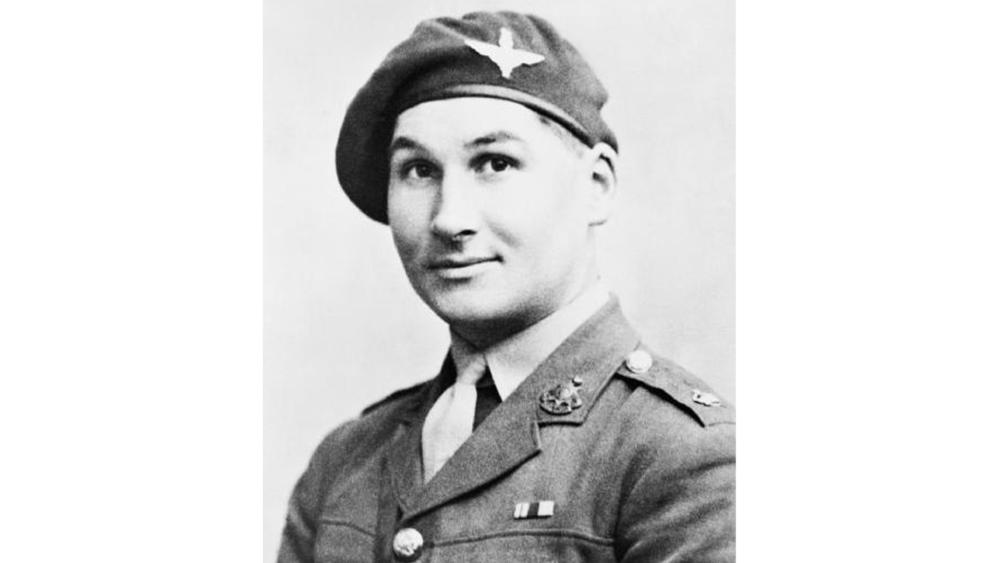
Lionel Queripel was 24 years old when he found himself commanding troops at Arnhem.
At one point during the battle his men were ambushed. They sought cover along a road as Lionel ran across repeatedly issuing orders to his men and directing their fire towards the enemy that had spotted them. His men were falling all around him. Without retreating, he rallied the survivors to take out the German position. Whilst carrying a wounded man to safety, he was hit in the face.
They neutralised the machine gun, but the battle was not over. Later in the day the men were tasked with defending the area around the drop zones. He was to protect a culvert, a tunnel running under the train tracks near the suburb of Wolfheze. This tunnel was crucial to the allied advance as it was here, that they could move men and equipment under the German positions in relative safety.
A fierce firefight broke out as Lionel and his men fought to defend it. Heavy mortar fire landed on their position and Lionel was wounded in both arms. He took refuge in a ditch alongside his men and continued the fight from there. For hours they held off the German advance. But seeing they were low on ammunition, he ordered his men to leave, voluntarily staying behind to cover their retreat. His men protested but it was an order, they left the last of the weapons with him and escaped.
Thinking he was killed, the Germans approached the ditch and threw a stick grenade over just to make sure. They must have had a shock when Lionel got back up and threw it back at them. As his men fled to safety, the last they saw of Lionel was him propped up in the ditch, wounded in the face and arms, throwing grenades and firing off the last rounds of his browning pistol.
Knowing he would likely die, he sacrificed himself so that they might live.
@adventurethroughhistory 5 Victoria Crosses, the highest British medal for courage and gallantry in action. Were awarded during the battle of Arnhem. Lionel Queripel was one of them. He held off hundreds of enemy soldiers so his friends could get away . He sacrificed his own life during the Battle of Arnhem. Remember him. Lest we forget . #ww2history #battle #victoriacross #britisharmy #war ♬ Another Love - Simon Clayton & Saymon Guitar & Soft Notes & Revelations
Sergeant John “Jack” Baskeyfield
John Baskeyfield, known as Jack to many, oversaw two anti-tank guns tasked with defending a T-junction on the road between Arnhem and Oosterbeek. Each of the two British six-pounder guns were designed to be operated by six men. The gun crews waited for the unmistakable sound of tank tracks to echo down the road.
The ground started to shake as their fears became reality. Almost immediately the British crews came under machine gun and artillery fire from the armoured vehicles. But Jack ordered his guns to hold until the enemy tanks were only 100 metres away. He was shot in the leg and two paratroopers fell dead beside him, but still they held their fire. Waiting for the perfect shot, as the distance closed, the two groups exchanged fire and the first tank burst into flames from Jack's cannon. Smoke, dust and the smell of blood filled the air.
The German tanks responded ferociously, firing shell after shell at the British gun crews. Enemy infantry poured down the street as Jack and his men fought what would be their last stand. They managed to knock out a second German vehicle before they themselves were finally silenced with a direct hit. Every British soldier of both gun crews were killed, apart from Jack. His gun was out of action, but the other one wasn't.
Crawling across the bodies of his comrades, he crossed the road in full view of the Germans, inching closer to the cannon across from him. Its mangled crew lay all around it. Alone, and mortally wounded, Jack loaded, aimed and fired a gun designed to be manned by a crew of six.
Engaging such an overwhelming force, it was a feat of self-sacrifice and bravery reminiscent of the Spartans at Thermopylae. As another tank approached him, he fired off a shell and destroyed his third vehicle of the day. Undeterred even by the rifle fire and machine gun bursts impacting all around him, he loaded another shell into his gun. It was at this moment, that Sergeant Baskeyfield would give his life for King and Country. A Panzer fired a shell at close range directly at his position.
He was 21 years old. His body was never found.
@adventurethroughhistory Jack Baskeyfield was 21 year old Butcher from Stoke. He found himself during WW2 fighting in the Battle of Arnhem. He was awarded a Victoria Cross for his actions there. He took on German Tiger tanks 100 metres away from him. Alone and wounded he kept firing to hold his position. He was later killed. Remember him. #historytok #stoke #ww2history #victoriacross #bravery ♬ Serious documentary music(1175570) - Art Music Style
Major Robert Cain
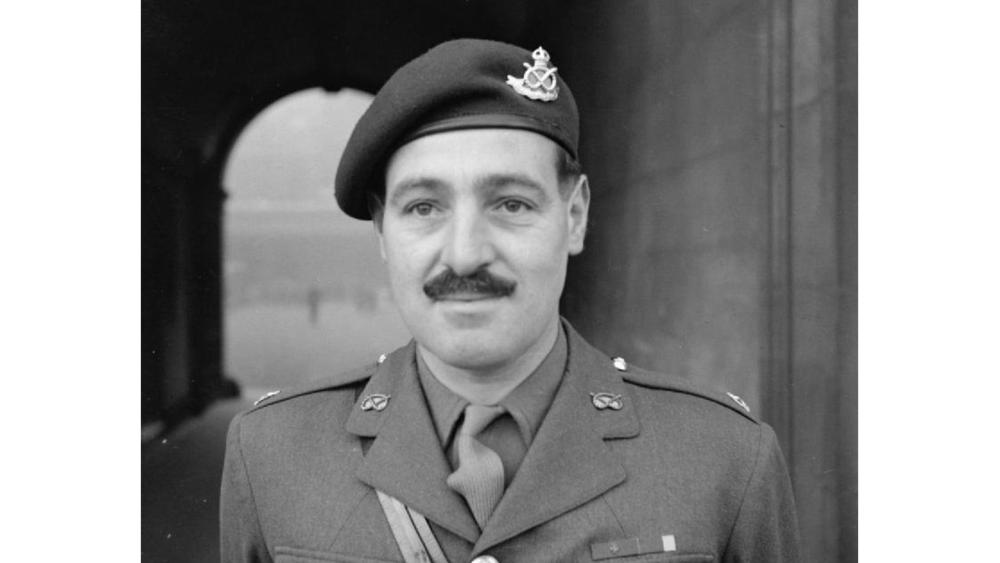
Of the five Victoria Crosses awarded for the Battle of Arnhem, only one recipient survived. His name was Robert Cain.
One of the most impressive tank hunters of the Second World War, armed with a P.I.A.T anti- tank launcher, he ran through the streets of Oosterbeek destroying the enemy at close range. The P.I.A.T wasn’t a reliable weapon at long distances, but this didn't deter Cain, as he approached a Tiger only 20 metres away. Laying in the middle of the road and completely exposed, Cain and the tank exchanged fire. Despite being wounded by its machine gun and falling masonry from the buildings destroyed around him, he fired again and again, ultimately destroying one of the most feared vehicles of WWII.
But he didn't stop there, the next morning he drove off three more tanks alone, his Victoria Cross citation stated, ‘On each occasion leaving cover and taking up position in open ground with complete disregard for his personal safety.'
Throughout the battle Cain was an inspiration to his men. In the engagement with the tanks, his eardrums had been burst by the shockwave of the blasts. Partially deaf and wounded, he still carried on the fight as flame thrower wielding infantry were sent against him. When the last of his launcher's ammo was fired, he skilfully utilised a small handheld mortar, detering further attacks by armoured vehicles.
By the end of the battle, Cain had destroyed or disabled six tanks, as well as several self-propelled guns. Unlike the other men who committed such acts of bravery at Arnhem, Cain escaped in the evacuation. He died aged 65 on the Isle of Man.


