
Operations Hardy and Wallace: The most successful SAS operations of WWII?
Steven Davies of Living History UK uncovers the story of Operations Hardy and Wallace, two overlooked SAS missions behind enemy lines in 1944.
The following guest article was written by Steven Davies from Living History UK. Across his social media accounts, Steven brings British military history to life with practical and intuitive insight to the uniform; kit and tactics used by British soldiers.
In this article, he turns his attention to two lesser-known SAS operations from World War II, Operations Hardy & Wallace.
History often has a habit of shining its spotlight on the familiar stories. In the case of the Special Air Service during the Second World War, that spotlight has frequently fallen upon 1SAS and the legendary exploits of men such as Paddy Mayne and David Stirling. Their achievements deserve every accolade they have received. Yet, in the shadows of those famous names lies another remarkable story - one that has largely been overlooked for more than eighty years.
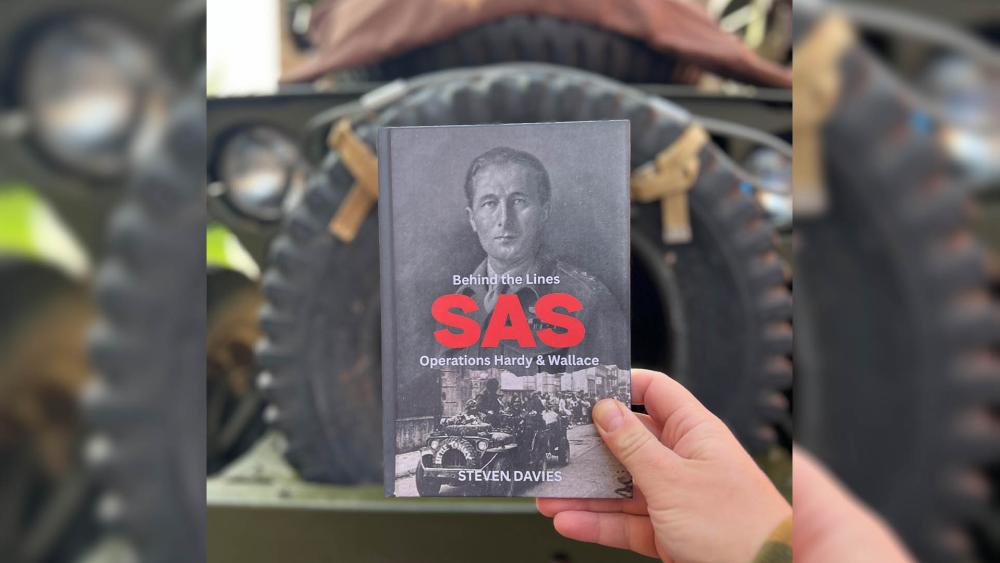
That story is the subject of my book, SAS Behind the Lines: Operations Hardy & Wallace.
As a living historian, my interest in the SAS began long before I ever considered writing a book. Living history is often described as a form of experimental archaeology; it is about going beyond simply reading history and instead attempting to understand how people lived, worked, and fought. Over the years, portraying the men of Operations Hardy and Wallace at events across the country brought me into contact with a network of dedicated historians, researchers, associations, and veterans’ families. Those relationships proved invaluable and ultimately opened doors to original source material that is rarely examined in detail today.
Researching the operation became far more than simply reading documents. It involved a careful study of wartime photographs to accurately identify the clothing, equipment, weapons, and personal kit carried by the men of Hardy and Wallace. Uniform details that might appear insignificant at first glance often revealed important clues about how the operation was conducted.
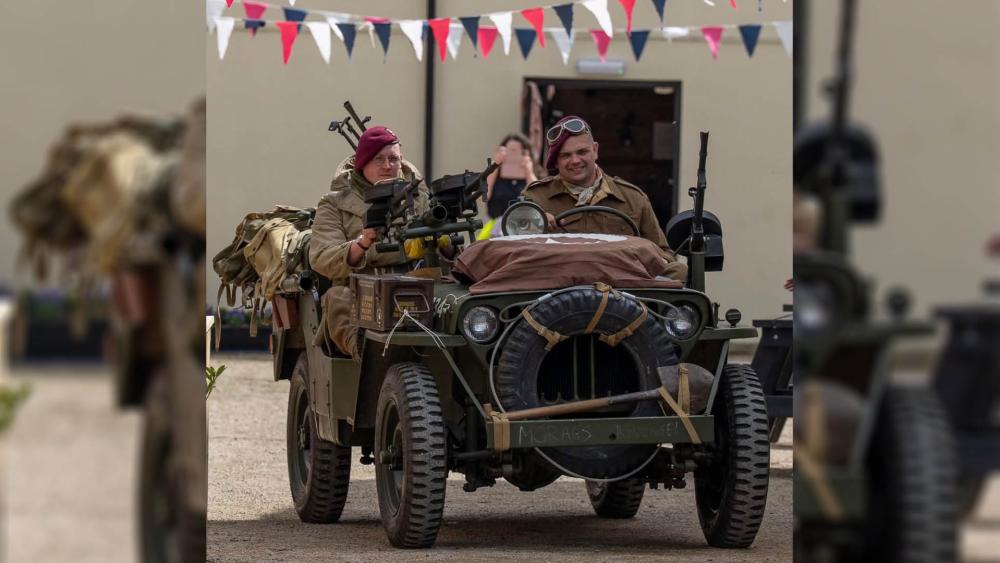
The same approach was taken with the vehicles. Through painstaking research, I undertook the modification of an original wartime jeep to match the specifications used by the Wallace Party in 1944, allowing me to better understand the capabilities - and limitations - of the machines that carried the SAS hundreds of miles behind enemy lines. This hands-on approach brought the story to life in a way that documents alone never could.
Among the most important sources consulted during the project was the official SAS War Diary. However, the book is built upon a much wider body of evidence, drawing together first-hand accounts written by the men who took part, archive documents, contemporary reports, local French accounts, and years of practical living history research. By cross-referencing these sources, it became possible to reconstruct one of the most audacious SAS operations of the war almost day by day, often from multiple perspectives. What emerged was a story that was far larger, more dramatic, and more compelling than I had ever imagined.
In the summer of 1944, as Allied armies pushed eastwards following the breakout from Normandy, the German Army was retreating towards the Belfort Gap. To disrupt that withdrawal, two SAS operations were launched deep behind enemy lines: Hardy and Wallace.
Operation Hardy arrived first. A small team of SAS troopers parachuted into eastern France to establish hidden bases, liaise with the Maquis, gather intelligence, stockpile resources and begin a campaign of harassment against retreating German forces. Under Captain Grant Hibbert, the Hardy Party operated in a world of uncertainty and constant danger. Supply drops went astray, patrols stumbled into German infantry, and fuel shortages threatened to bring operations to a halt. Yet despite these challenges, the SAS and their French allies carried out a series of successful ambushes and sabotage raids, including the destruction of more than 100,000 gallons of German fuel at Foulain.
Then came Operation Wallace.
Led by Major Roy Farran, who was just 24 years old at the time - and already sported a Military Cross (MC) with two bars -, was one of the SAS's most talented and experienced commanders. The Wallace Party embarked upon what would become one of the most audacious raids of the Second World War. Despite his youth, Farran was already a veteran of the North African and Italian campaigns, having earned a reputation for bold leadership and an instinctive understanding of unconventional warfare. Entrusted with a force of heavily armed jeeps, he led his men on a remarkable 375-mile drive through and behind enemy lines, penetrating deep into occupied France at a time when German forces were desperately attempting to retreat towards the Belfort Gap.
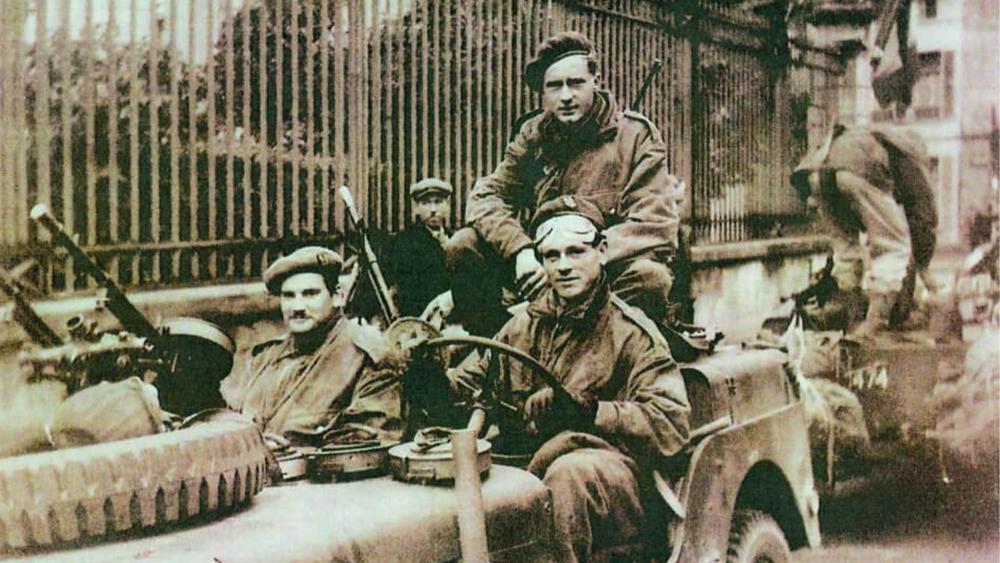
Operating from the shadows, Farran's men struck wherever opportunity presented itself. Convoys were ambushed, railway lines sabotaged, fuel dumps destroyed, and German headquarters harassed before the SAS disappeared back into the forests and byways of eastern France. It was warfare at its most mobile and unpredictable, relying on speed, surprise, and aggression rather than numbers. At times the Wallace Party found itself outnumbered, low on fuel, and surrounded by enemy forces, yet Farran's leadership ensured the operation continued. Even when German troops, armoured vehicles, and batteries of 88mm guns closed in, the SAS remained elusive.
The result was one of the most successful special forces operations of the war. For a force numbering little more than a hundred men, operating hundreds of miles behind enemy lines, the disruption caused to German communications and transport was extraordinary. It is little wonder that Operations Hardy and Wallace were later described as the most successful SAS operations of the Second World War.
Yet for all the excitement and daring, this is not merely a story of military success. It is also a story of individuals.
Men such as Lieutenant Hugh Christopher Gurney, a young officer from Norfolk who was killed during an ambush near Velorcey, and Trooper Bill Holland who was killed in the village of Chatillon-sur-Seine. Men such as Captain Hibbert, who would go on to serve with the SAS during Operation Archway in Germany and eventually reach the rank of Major, yet remains an elusive figure about whom surprisingly little is known today. Men whose courage and sacrifice deserve to be remembered alongside the better-known heroes of the regiment.
Perhaps what struck me most during my research was just how precarious these operations often were. Time and again, the SAS found themselves outnumbered, low on ammunition, short of fuel, and operating in areas swarming with German troops. There were moments when the entire enterprise seemed on the verge of collapse. Yet through a combination of audacity, adaptability, and sheer determination, they continued to strike at the enemy until the arrival of Allied forces finally brought their mission to an end.
And yet, despite that achievement, their story has never enjoyed the same recognition as many other wartime SAS operations. In many histories of the regiment, the exploits of 2SAS are overshadowed by those of 1SAS. While the achievements of both units deserve recognition, Hardy and Wallace demonstrate that 2SAS was every bit as capable, aggressive, and effective in the field.
That is why I wrote this book.
SAS Behind the Lines: Operations Hardy & Wallace is the culmination of years of research, living history, vehicle restoration, archival study, and collaboration with fellow historians, associations, and veterans' families. Drawing upon the official SAS War Diary, first-hand accounts, archive material, wartime photographs, and local records, it seeks not only to tell the operational story but also to bring the men behind it back into focus - to remember their achievements, their hardships, and, in some cases, their sacrifice.
More than eighty years later, the forests, villages, and roads of eastern France still bear traces of their passage. This book is my attempt to ensure that their story, too, leaves its mark.
SAS Behind the Lines: Operations Hardy & Wallace is available now.


