

Andrew Price on bushcraft, ancient knowledge and representing Wales on Alone
Survival expert Andrew Price explores Welsh bushcraft, prehistoric knowledge, the Red Lady of Paviland and his journey to the Arctic Circle on Alone.
Image: Andrew Price represents Wales in the upcoming 'Alone: World Championship' | Alone
In this guest article, survival expert Andrew Price explores the ancient skills that connect prehistoric Wales to modern wilderness survival, and reveals how that knowledge helped shape his journey to the Arctic Circle on Alone: World Championship.
What would you do if?...
That’s how it all began. A question, scrawled on a scrap of paper and passed surreptitiously under the desk during a tedious Maths lesson.
What would you do if a T-Rex burst into the classroom? What would you do if you had a time machine? What would you do if you were dropped in the middle of the Arctic with only 10 items? A simple game to pass the time with my equally bored classmates, before we could escape the confines of the classroom and get back outside where we belonged.
I didn’t know it at the time, but that silly game would form the basis of my direction in life. Creative problem solving and applying practical solutions to changing circumstances are at the core of survival psychology. Building strategies around and preparing for the 'What Ifs?' has been my business for over 20 years. It’s a profession that’s taken me to some fascinating places and given me a deep insight into how people respond when they find themselves outside their comfort zone.
As a boy growing up in South Wales, my grandfather introduced me to foraging. Together we'd collect laver seaweed, mussels and blackberries from the shoreline and hedgerows around the Gower Peninsula. My father taught me how to fish for bass and mackerel from an ancient canvas and wood kayak, around Mumbles Lighthouse. Looking back, neither of them probably realised they were laying the foundations for what would become a lifelong passion and a career. They weren't simply teaching me things that they had themselves learned from their elders - they were teaching me to see the landscape differently, to see the resources where others didn’t.
That curiosity only deepened as I grew older. At 15 I joined the Air Training Corps, where I developed outdoor skills, navigation and fieldcraft. Later, an expedition with Raleigh International to Borneo and Peninsular Malaysia introduced me to the Orang Asli people of the Cameron Highlands. Living alongside an indigenous community who exist with such confidence and harmony in their environment transformed my understanding of survival. It wasn't about hardship; I was witnessing an intimate relationship between human beings and their environment; knowledge passed from one generation to the next in a seamless transfer of ancestral wisdom.
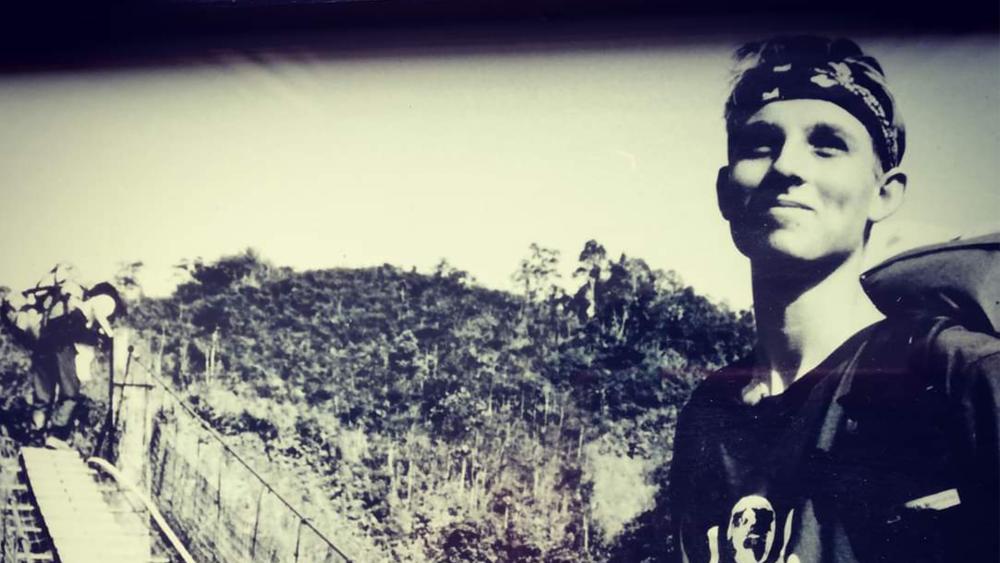
Although I later built a career in television after studying Media at the University of Plymouth, I eventually realised that my heart belonged outdoors rather than in a studio. Years of travelling through Australia, New Zealand, Canada, Scandinavia and Southeast Asia allowed me to learn from different landscapes and cultures before returning to Wales to establish Dryad Bushcraft in 2004. Since then, my goal has always been simple: to preserve and share authentic wilderness skills while helping people reconnect with nature. While the steady march of technology may have taken the human race further away from nature it’s also created opportunities to share skills and experiences with a global audience. Social media and in particular YouTube have become essential tools in this exchange of ideas. I made my first YouTube video in 2007 and have been an enthusiastic Youtuber ever since.
For me, survival has never been about preparing for disaster. It is about understanding the relationship between people and the natural world. Bushcraft is simply the practical expression of that relationship. Every fire lit without modern tools; every shelter built from natural materials and every edible wild plant harvested reminds me that these are not new ideas - they are ancient human skills.
Living in Wales means living among the footprints of our ancestors. Ancient hillforts, burial chambers, standing stones and caves are scattered across the landscape, quietly reminding us that people mastered these environments thousands of years before modern technology.
No prehistoric discovery has inspired me more than the Red Lady of Paviland.
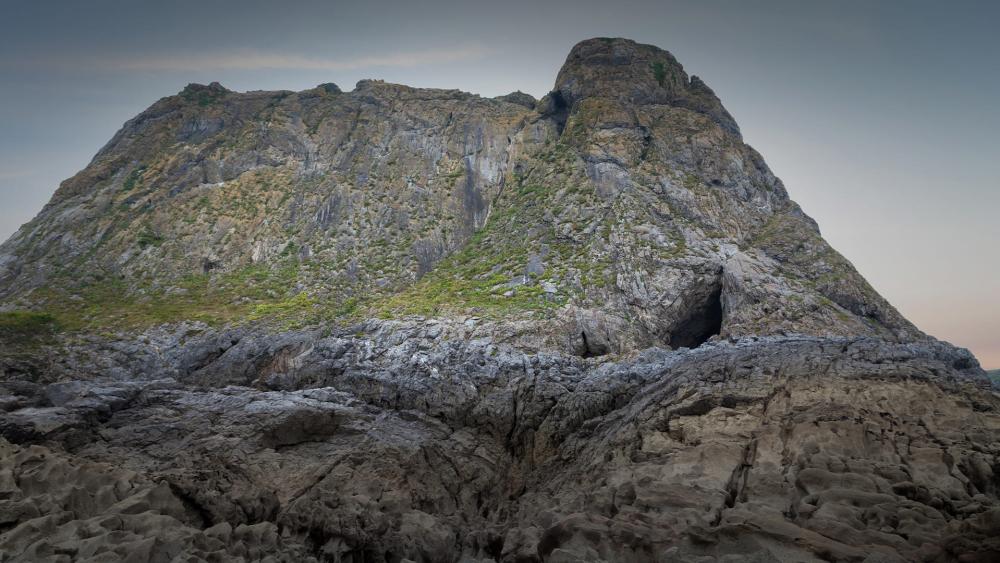
Image: The Red Lady of Paviland remains were found in a cave on the Gower Peninsula | stock.adobe.com
Discovered in 1823 at Paviland on the Gower Peninsula, by Reverend William Buckland of the Oxford University department of geology, the burial was originally assumed to be that of a young woman from the Roman era - now understood to be that of a young man who lived around 33,000 years ago - and is one of Britain's most extraordinary archaeological finds. The red ochre, carefully placed grave goods and ceremonial burial reveal that these Stone Age people possessed not only remarkable survival skills but also rich spiritual lives and sophisticated traditions.
Standing near Paviland, I often find myself wondering what knowledge those people carried. They understood every season, every animal trail, every useful plant and every change in the weather. They made fire without matches, fashioned tools from stone, antler and bone, and lived entirely through observation, patience and experience. Their greatest technology was knowledge itself.
Those thoughts have profoundly influenced my own interest in ancestral skills. Primitive fire lighting, natural cordage, tracking, stone tools, shelter building and foraging are far more than historical curiosities. They represent thousands of years of accumulated human wisdom. Every time I practise these skills, I feel as though I'm preserving a small piece of that inheritance.
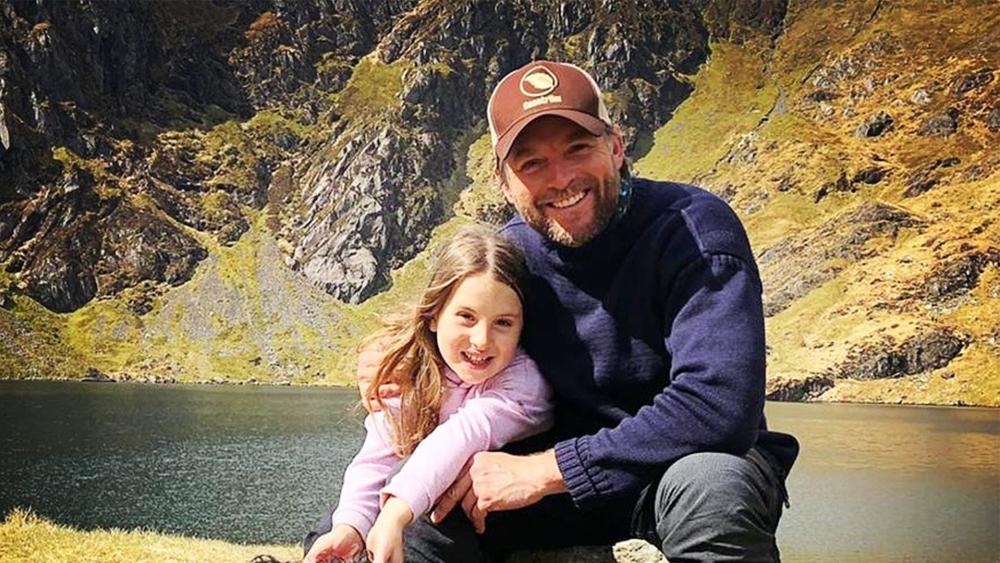
Teaching has become one of the most rewarding parts of my journey. Watching someone create their first friction fire or recognise an edible wild plant reminds me that these ancient skills still have enormous value today. They build confidence, resilience and a genuine appreciation for the natural world. All factors that can be harnessed towards improving the wellbeing of ourselves and our community.
That lifelong journey eventually led to one of the greatest challenges of my life: representing Wales on season 13 of Sky HISTORY's Alone.
Competing in the Alone 'World Championship' wasn't simply another television programme for me. It was the culmination of decades spent learning, teaching and refining wilderness skills. Dropped alone into a remote region of the Arctic Circle as one of 10 international survivalists, I had the opportunity to test everything I had learned. To push myself to the absolute limit of endurance in one of the harshest environments on Earth. It truly felt like competing in the survival world's equivalent of the World Cup, and an opportunity to represent Wales on the international stage.
Yet even in the Arctic, I found myself thinking about home. I carried with me not only the practical skills developed over a lifetime but also the lessons rooted in the landscapes of Wales - the coastline where I first learned to forage, the hills where I explored as a boy, and the prehistoric ancestors whose ingenuity continues to inspire me.
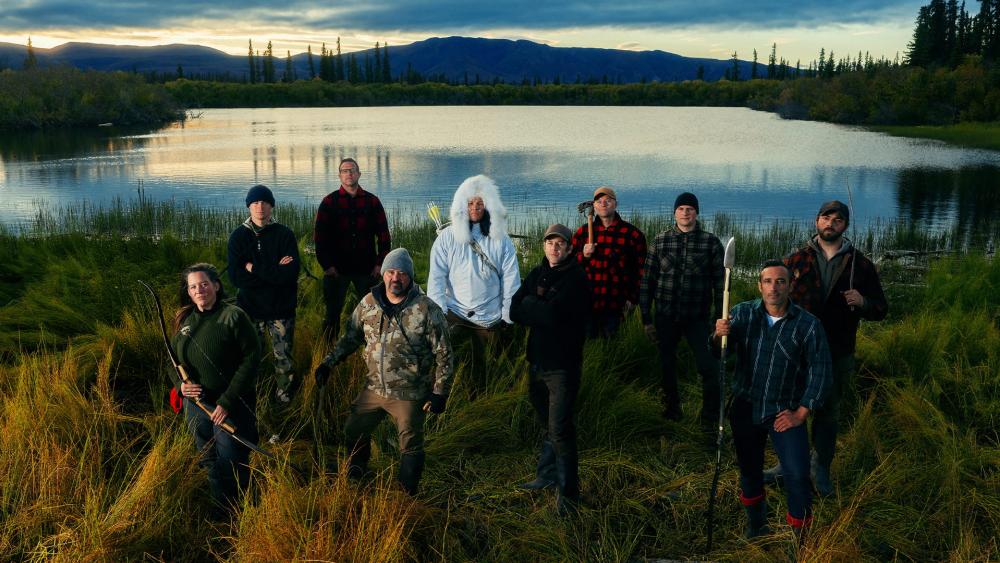
Image: The 'Alone: World Championship' participants | Alone
Ultimately, survival has never been just about enduring difficult conditions. It is about understanding where we came from. Our ancestors survived because they observed, adapted and respected the land. Those lessons remain just as relevant today.
Every time I blow an ember into life or walk through an ancient Welsh woodland, I am reminded that we are part of an unbroken story stretching back tens of thousands of years. The Red Lady of Paviland, the hunter-gatherers of prehistoric Wales and everyone who passed these skills from one generation to the next all contributed to my story. As I teach my daughter how to safely split firewood with an axe, shoot a bow or cook over a fire I feel a sense of satisfaction that this chain knowledge doesn’t end with me.
If my own journey - from the beaches of Gower to the Arctic Circle on Alone - has taught me anything, it is that the greatest survival tool we possess is knowledge. My hope is that by sharing these skills, I can help ensure that a little of that ancient wisdom continues to inspire future generations.
To learn more about Andrew and his work, visit his website or subscribe to his YouTube channel.
Season 13 of Alone starts Thursday, 13th August on Sky HISTORY.


