
A historian asks, 'How did the Mongols change the world?'
For centuries, the Mongols have been remembered primarily as fearsome conquerors. Historian Marie Favereau explores how Genghis Khan and his successors also transformed trade, science, cartography and the movement of people and ideas across Eurasia.
Marie Favereau is Associate Professor of History at Paris Nanterre University and author of The Horde: How the Mongols Changed the World. She helped curate Genghis Khan: How the Mongols Changed the World at the Royal Armouries Museum, an exhibition that explored the Mongol Empire through the latest historical research. In this guest article, Marie examines how the Mongols transformed trade, administration, science and the movement of people and ideas across Eurasia.
For centuries, the Mongols have been remembered above all as fearsome warriors who swept across Eurasia, building an empire through violent conquest. But is that the whole story?
Civilisation is not necessarily the product of urban, settled societies. Over two millennia, humanity witnessed the rise and fall of several nomadic empires that profoundly shaped our history on continental scale: the Scythians, the Xiongnu, the Turks, the Uygur, the Mongols in Eurasia, the Ghana and Mali empires in Africa as well as the Comanche and Lakota in North America.
Nomadic empires are often seen as marginal or secondary historical phases. Although they now feature in general history books, radio and television programmes, the content is often outdated, or inaccurate, and presents them as an exception or a digression in human history.
Based on new historical research, I have curated an exhibition which brings to the fore another narrative.
The Mongols had open cities, administrative paperwork, currency and travel documents. They were exceptionally skilled at facilitating trade, with a sophisticated understanding of ecology and mobility. As cultural brokers, they brought diverse peoples together and often adopted a pragmatic approach to religious tolerance and integration.
Genghis Khan: How the Mongols Changed the World looks at the empire’s historical significance through this lens. The exhibition was on display at the Royal Armouries Museum.
Who was Genghis Khan?
Genghis Khan was born Temüjin, meaning ‘blacksmith’, around 1162 in the Khentii mountains at the source of the Onon river.
Temüjin’s lineage was among the noble ones. His people called themselves ‘Mongols’ and they were both herders and hunters. We tend to picture the Mongols on horseback across open grasslands, but many of them inhabited hilly river valleys, mountains, and forests.
The Mongols inhabited a plateau of approximately 1.2 million square miles bordered by mountain ranges. By the twelfth century, the Mongols already perceived the plateau as a sociopolitical unit. They shared the area with the ‘Felt-Walled Tents’, a name they used for nomads whether they spoke Mongol or Turk, or both. Turk powers, such as Kereyit and Naiman, dominated the centre and the west of the plateau. In the south-east, the Tatars, Mongols’ hereditary enemies, flourished thanks to their ties with the Jin, rulers of northern China.
The Mongols were initially a less powerful group. They began to unite around 1130, during the time of Temüjin’s great-grandfather, but struggled to overcome the powerful Tatars. That would change when Temüjin took the lead.
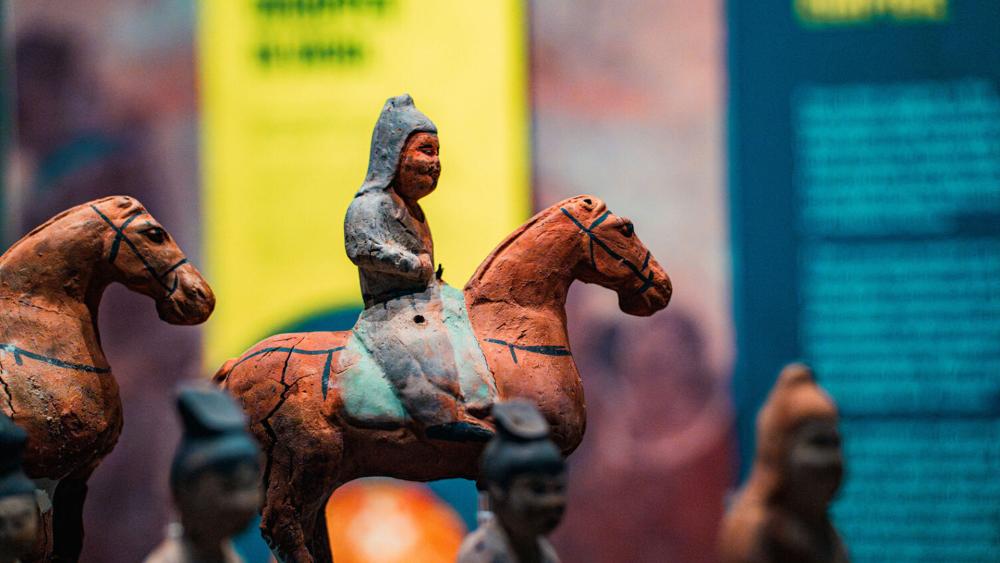
How did Genghis Khan unite the Mongols?
From the earliest stage of his career, Temüjin showed an unstoppable determination to subdue the peoples of the plateau. His goal was to gather the Felt-Walled Tents under his banner and to shape a new nation in which the nomads would be called Mongols. It was a long and difficult process, built on the accumulation of men, weapons, alliances and military victories.
In 1206, he accomplished his goal and during a great nomadic assembly he took the title Chinggis Khaan (Genghis Khan), ‘universal king’. The title was unprecedented, as was the achievement behind it. After two decades of struggle, Temüjin had defeated the Tatars and the Turk powers that had long challenged him.
For the first time in centuries, there was only one ruler over the plateau. Warfare had helped him achieve this, but this was only one of his strategies to assert the Mongol order.
How did the Mongol Empire govern such a vast territory?
Military conquest alone could not sustain an empire. Chinggis Khaan needed institutions capable of governing a growing population and incorporating new peoples.
Administration was a key organ of the new regime. As early as 1204, Chinggis Khaan ordered his secretaries to adapt the writing system of the Naiman to the Mongol language.
Around the same time, he established several important institutions: the keshig, a guard with thousands of members who shaped the first Mongol central government; the quriltai, assembly of the nomads; and the tümen, the decimal military structure which allowed incorporation of new soldiers and redistribution of spoils through hierarchy.
Engineered by steppe nomads centuries earlier, these native institutions had the advantage of being adaptable to the growing size of the Mongol people. Most importantly, they gave Chinggis Khaan’s subjects a sense of familiarity.
The regime's strength was also its weakness. It had a constant appetite for people, needing new members to sustain its economic and military power. Rather than physically eliminating all their defeated enemies, the Mongols often sought to incorporate them into their forces. Warriors and their families were assimilated, and leading women were married into the ruling networks. In time, even former enemies such as the Tatars became Mongols.
Chinggis Khaan established his leadership on both continuity and rupture. To undermine rebellion against the regime, his new armies were composed of warriors who did not originally belong to the same group. Command was entrusted to his closest comrades-in-arms, chosen for their loyalty to the new regime. At the same time, he adopted governing practices from earlier rulers, allowing life on the plateau to continue in ways that made assimilation possible.
The ruling elites remained exclusively Mongol and the new social hierarchy revolved around Chinggis Khaan’s father’s line, the Kiyad-Borjigid, now called the golden lineage.
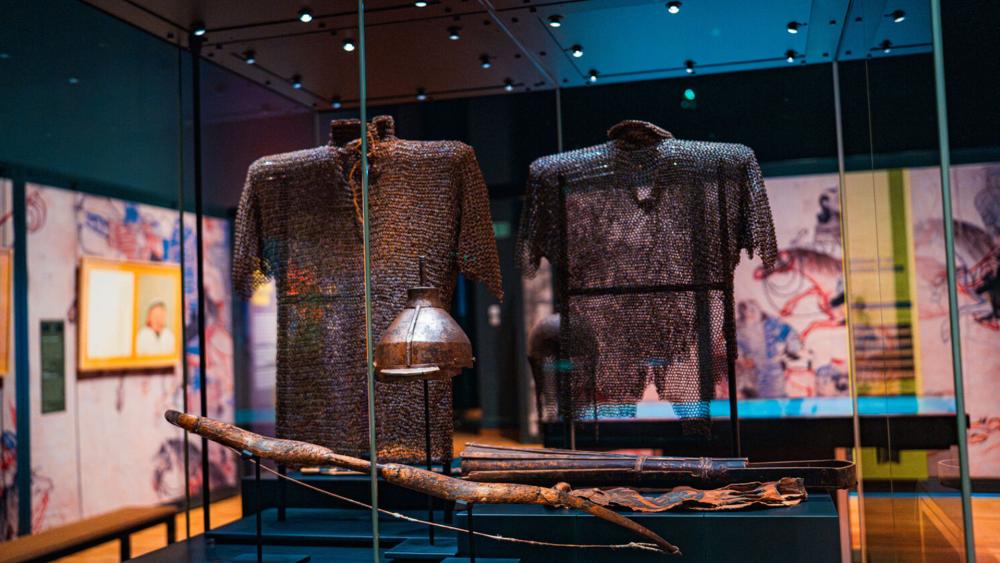
Mongol Expansion
Soon after the assembly of 1206, the conquests of western and northern China started. Mongol expansion beyond the plateau had several motivations. First, Chinggis Khaan wanted to get rid of his blood rivals. Second, he wanted to take control of the trade routes to monopolise the most lucrative networks. Third, he wanted to renegotiate the Mongols’ position in the world by establishing a network of loyal partners and taking systematic revenge on those considered unreliable.
Campaigns were targeted at those perceived as threats. Especially the Jin whose policy of divide and rule threatened the unity recently achieved among the Felt-Walled Tents. The war against the Jin started in 1211. The conquest of Northern China was long, difficult and bloody. In May 1215, the Mongols finally attacked Zhongdu, laying siege to the fortified city.
In 1216, with the Jin about to surrender, Chinggis Khaan entrusted Muqali, one his best commanders, to pacify the region as he had another battle to fight on his western frontier. The Qara Khitai had hosted Naiman enemies. Responding to this threat, Chinggis Khaan sent an army against them. This was the first step to the Mongol’s conquest of Central Asia. This culminated in 1221 with the fall of the Khwarezmian Empire, including the seizure of Samarkand, the region's largest trading hub.
Chinggis Khaan’s new vision for the world: Mongols mapping
The records on these campaigns show that Mongol warriors knew where to go, had a precise idea of distances, and where to place villages, cities, and river crossings just like they knew how long it took to messengers and merchant caravans to travel from a point to another within their new territories.
The Mongols used maps reproduced on silk, which they drew during campaigns using information given by the scoot troops and the merchants. This knowledge was essential to an empire that depended on movement and reflected the Mongol’s skill to understand distance, landscape, and mobility.
One of Chinggis Khaan’s goals was to economically integrate Mongolia, Northern China, and Central Asia – a goal partially achieved at the time of his death in 1227. His four sons and five daughters continued his work, extending the pragmatic approach and worldview of their ancestors. A key Mongol belief disseminated was that the Khans did not rule solely by their own authority but that they received a divine mandate from Tengri (the Sky or the Heavens).
Were the Mongols simply ruthless conquerors?
As the Mongols established one of the largest empires the world had ever seen, it has raised fascination and fear. It is easy to assume that the conquerors of two-thirds of Eurasia must have relied on violence at every turn.
Yet, Chinggis Khaan and his successors considered their conquests as something in the pursuit of political and economic objectives. They sought to bring the nomads of the steppe under their authority, incorporate defeated enemies into their armies and communities, and impose a new economic order that enabled the Mongols to trade with a wide range of peoples – to their benefit. War was a means to an end.
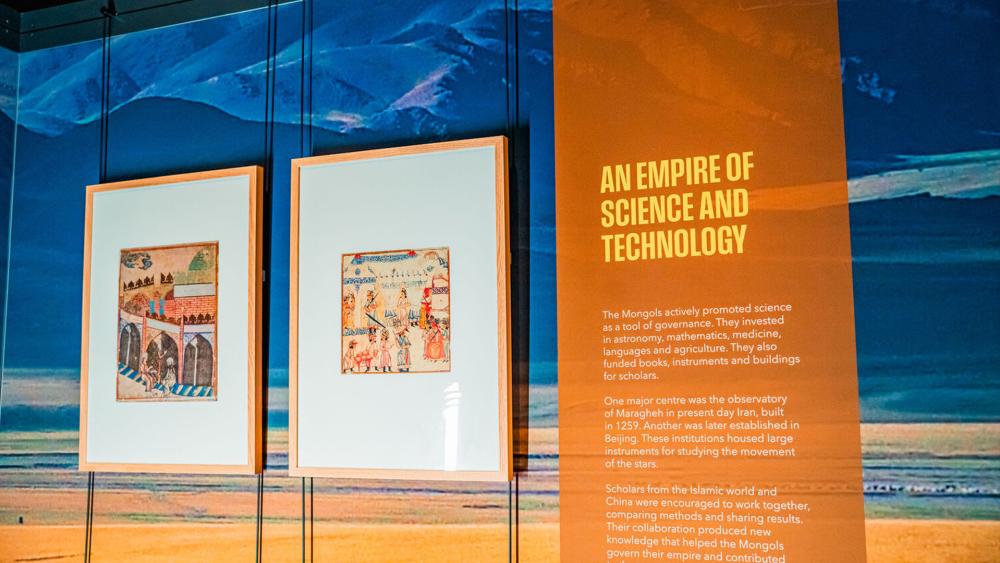
How did the Mongols reshape our understanding of the world?
The Mongols’ influence extended far beyond conquest and trade. Astronomy, mathematics and cartography also became important parts of imperial life. Chinggis Khaan’s successors helped bring together scientific traditions from across Eurasia and foster a new understanding of the world.
The Maragheh Observatory, founded in 1259 by Hülegü, Chinggis Khaan’s grandson, was a major scientific centre, equipped with advanced astronomical instruments, a library of thousands of volumes and facilities for scholars from different backgrounds. Its work was supported by substantial Mongol investment, including funding intended to ensure the institution’s long-term survival.
Under Kublai Khan, this commitment to scientific knowledge continued. His court attracted scholars from across Eurasia, including the Persian astronomer and geographer Jamal al-Din, whom Kublai tasked with helping to produce a comprehensive picture of his vast empire.
The challenge was considerable. The Mongol Empire stretched across territories that today form part of Korea, Mongolia, China, Iran, Russia and Eastern Europe, yet no single map brought all these regions together. Jamal al-Din proposed combining Chinese, Arabic and Persian geographical knowledge to create a more complete representation of the world under Mongol rule.
His monumental geographical work, completed in 1303, did not survive. However, its ideas were carried forward through later cartographic traditions, including the Kangnido map, produced in Korea in 1402. It is considered the first East-Asian map which offered a panoramic vision of the entire Afro-Eurasian space with precise shapes of the Arabian Peninsula, Africa and Europe.
The new vision of the world initiated under the Mongols transformed not only Chinese and Islamic traditions, but it had also a major impact in the West, prompting a radical change in western cartography during the 14th century. Notably, references to sacred history were replaced by practical information drawn from merchants' handbooks and travel accounts, including Marco Polo's Description of the World.
The Mongols’ support for scientific institutions and scholars helped encourage the exchange of knowledge across cultural and geographical boundaries.
A lasting legacy
The Mongol empire was both nomadic and remarkably modern for its time. It developed a new understanding of space founded on mobility, observation and mathematical abstraction.
It was the size of a continent and is labelled today as the largest contiguous land empire in history. Yet, its impact reached beyond its frontiers.
The Mongols brought West and East together like no other ever did. By funding long-term scientific projects such as observatories, Chinggis Khaan and his successors contributed to the development of a new world vision. Their interest in astronomy and geography helped support a wider exchange of knowledge, while the maps and geographical works produced under Mongol rule influenced later generations.
Their empire was built through conquest, but the Mongol’s historical significance cannot be measured on this alone. The Mongols transformed the movement of people, goods and ideas across Eurasia and demonstrated how a nomadic people could reshape political power and provide humanity with a new vision for the world.
To learn more about the fascinating history behind Genghis Khan and the Mongol Empire, visit the Royal Armouries Mongol Hub. 'Genghis Khan: How the Mongols Changed the World' was part of the Royal Armouries newly launched Special Exhibition programme. A new exhibition is set to be announced for June 2027.


