

In 1995 scientists reopened Marie Curie's grave. What they found needed a lead coffin
Nobody knew Marie Curie's coffin was lined with lead until 1995. The reason why is still unfolding today.
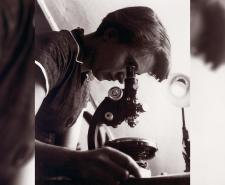
Image: Marie Curie | Public Domain
When Marie Curie was buried in 1934, nobody disturbed her rest for 61 years. That was until France decided to dig her back up.
What the exhumation team found inside her coffin was enough to change how the entire operation was carried out, and it is still shaping how she is treated today.
France wanted to give her its highest honour. It nearly couldn't.
By the early 1990s, French president Francois Mitterrand wanted to move Marie Curie, and her husband Pierre, somewhere more fitting than a quiet cemetery outside Paris.
The destination was the Pantheon, the domed mausoleum in the heart of the city where France lays its greatest historical figures to rest. Voltaire is there. So is Rousseau.
And now, the mother of modern physics would become the first woman honoured there for her own achievements, rather than as someone's wife.
It should have been a formality. Move the coffin, hold a ceremony, done. Instead, officials made an unusual call before anyone touched the grave: they brought in France's radiation protection agency.
Curie had spent decades working with radium and polonium, the elements she herself discovered. She had died of aplastic pernicious anaemia – a blood disorder almost certainly caused by that exposure.
Six decades on, could any of that still be a risk to the people about to open her grave?
The moment the coffin came open
The team went in prepared. Protective clothing. Monitoring equipment. A protocol for handling contaminated material if it came to that.
At first, the readings looked normal. Then the grave opened, and the levels of alpha and beta contamination began to climb.
Fortunately, it wasn’t to a dangerous extreme. But it was enough to confirm what everyone had suspected and hoped they wouldn't find: Marie Curie was still radioactive, more than 60 years after her death.
And then came the detail nobody had known until that exact moment. Her coffin, which had initially appeared to be made of wood, had been lined with 2.5mm of lead.
It had been all along, since 1934, without record or public knowledge. Someone, at the time of her original burial, had understood exactly what they were dealing with and had taken no chances.
The part that hasn't gone away
Radium has a half life measured in centuries. Curie's remains, and the belongings she surrounded herself with while she worked, are expected to stay radioactive for around another 1,500 years.
Her lab notebooks are still kept in lead-lined boxes today. Anyone who wants to consult them has to sign a liability waiver first to prevent exposure to radium-226.
There is a strange irony sitting at the centre of all of this. Marie Curie won two Nobel Prizes for uncovering the nature of radioactivity, work that transformed medicine, physics and warfare.
But that same discovery is the reason her body, over 90 years after her death, still cannot be safely touched.
For more unbelievable stories from history, sign up to the Sky HISTORY newsletter today. Get insightful articles, guest columns and the hottest new content from Sky HISTORY shows delivered straight to your inbox.


